SALINK Founder · 2026-11-06
Different Lands, Similar Tables: Uzbek Kazan Kebab and Lebanese Kastaleta
From a Central Asian cauldron to Levantine lamb chops — discovering familiar flavors across distant cultures
Different Lands, Similar Tables: Uzbek Kazan Kebab and Lebanese Kastaleta
From a Central Asian cauldron to Levantine lamb chops — discovering familiar flavors across distant cultures.
A Little Central Asia in Korea
As I mentioned in an earlier article, the area where I live has a surprisingly vibrant Central Asian community.
A drive of about ten minutes takes me to neighborhoods where Uzbek, Russian, Central Asian, and ethnic Korean communities from the former Soviet Union have established businesses and gathering places.
There are halal restaurants, grocery stores, and even mosques.
Whenever I visit these neighborhoods, I am reminded that cultures once considered distant or unfamiliar have gradually become part of everyday life in South Korea.
Among the many Uzbek dishes I have encountered, one has left a particularly strong impression on me.
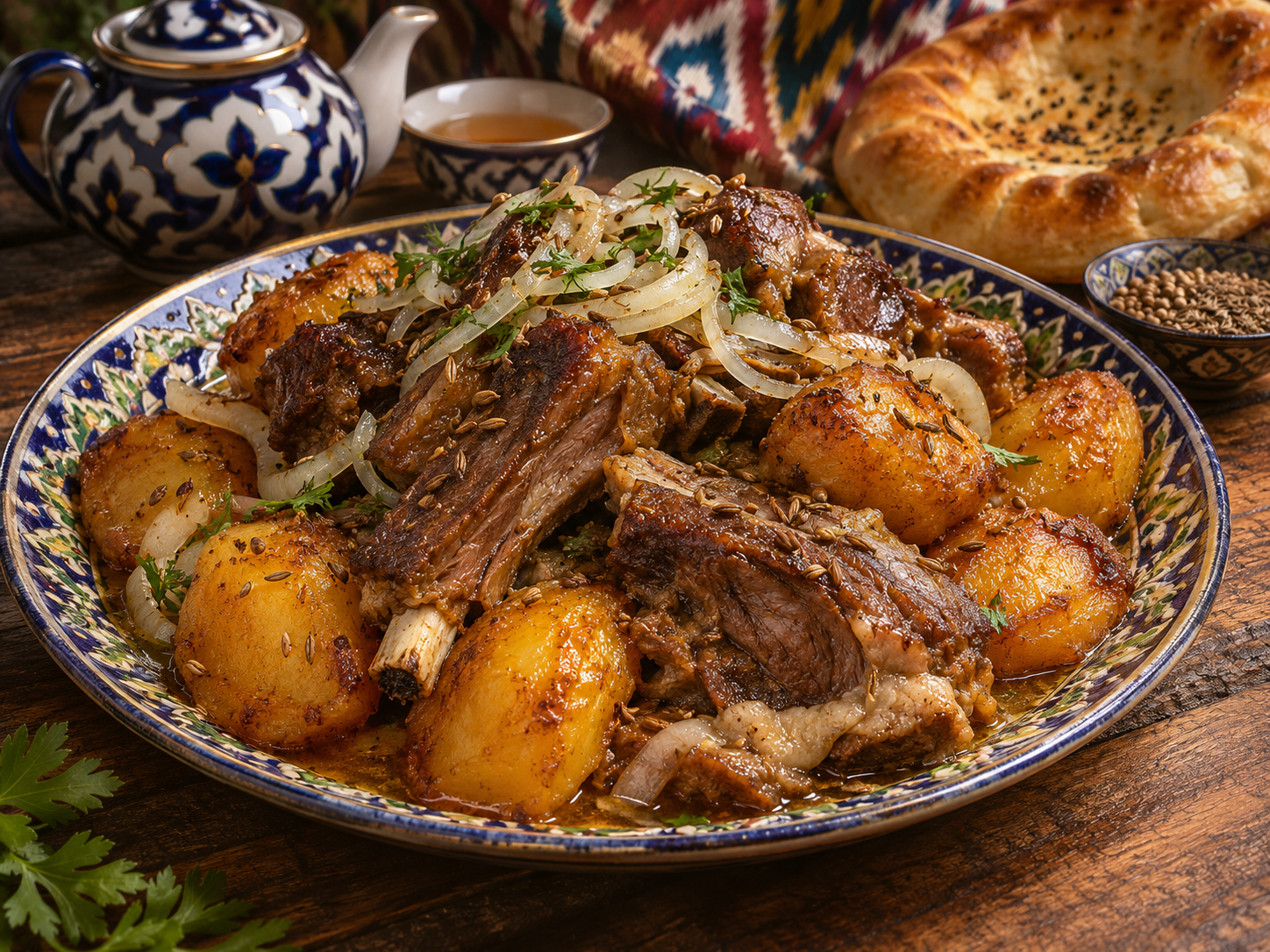
It is Kazan Kebab, also known as Qozon Kabob.
Much as different regions of Korea are known for their signature bowls of hearty soup and rice, Uzbekistan has its own deeply satisfying dishes built around meat, potatoes, and generous portions.
Kazan kebab is one of them.
The name itself is intriguing.
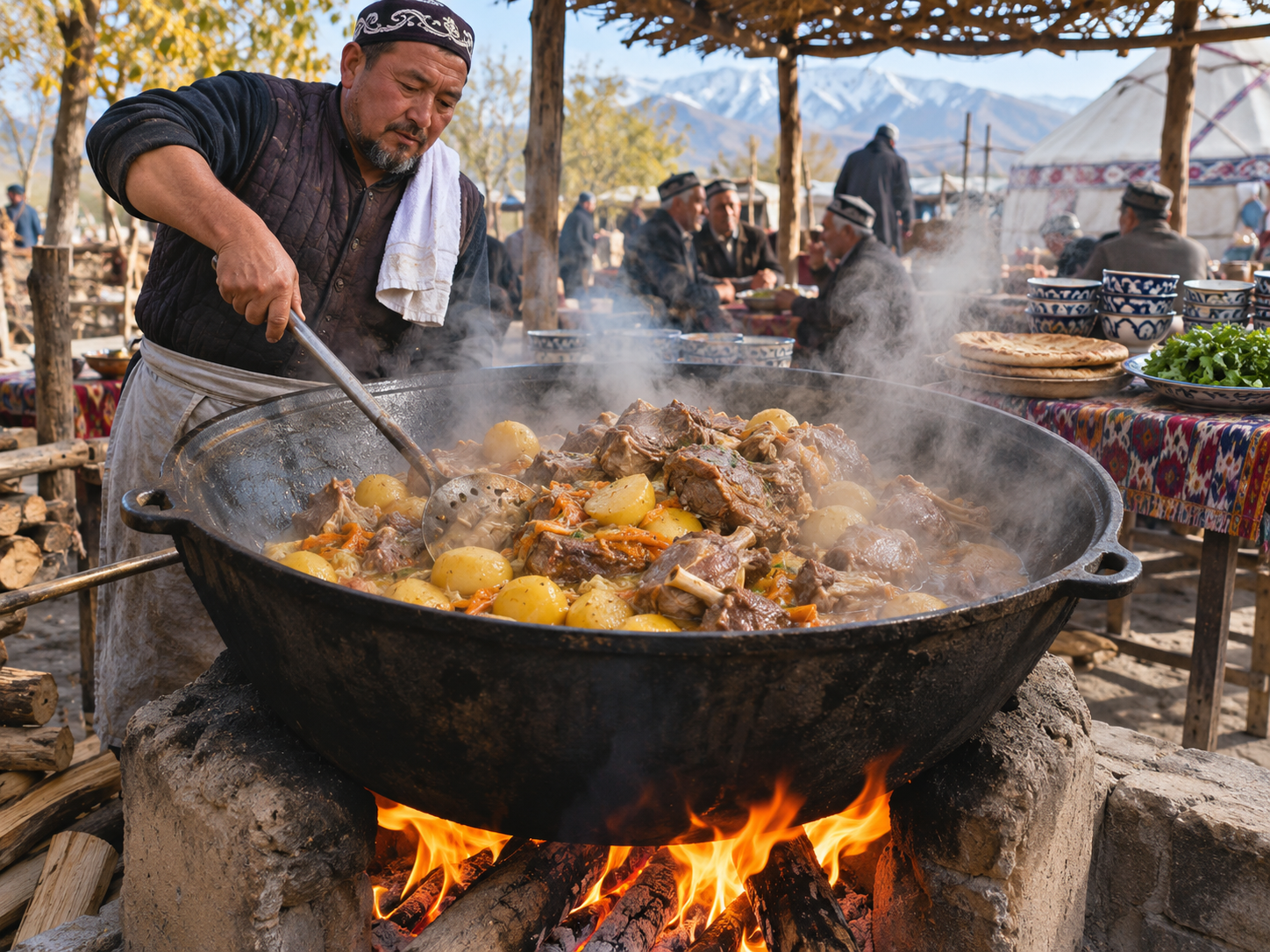
Kazan, or qozon in Uzbek, refers to a large cooking cauldron widely used throughout Central Asia.
Interestingly, Kazan is also the name of a major city in Russia. There are various theories and legends connecting the city's name to the Turkic word for cauldron.
One explanation suggests that the city's location resembles a hollow basin. Another legend tells of a cauldron falling into a river.
The precise origin of the city's name remains debated.
But today, I am less interested in the Russian city than in the delicious food prepared inside a Central Asian cauldron.
A Kebab Without Skewers?
When many Koreans hear the word kebab, they immediately imagine Turkish döner kebab.
Others may think of şiş kebab or the skewered meat known as shashlik, familiar throughout Central Asia and neighboring regions.
Yet kebab is not limited to meat cooked on skewers.
Across different culinary traditions, the word has been used for a broader range of meat preparations, including dishes that are roasted, fried, or slowly cooked.
Uzbek kazan kebab offers a particularly interesting example.
Large pieces of lamb, beef, or sometimes chicken are seasoned and cooked with potatoes.
The meat and potatoes are often browned in hot oil before being arranged in a heavy cauldron with onions and spices.
Depending on the recipe, a little water may be added, or the ingredients may finish cooking in their own juices and steam.
As the pot remains covered over gentle heat, the meat softens and the potatoes absorb the rich flavors of the cooking fat and juices.
Cumin and coriander may contribute their characteristic aromas, but the central attraction is the satisfying simplicity of meat and potatoes.
The result is substantial, fragrant, and wonderfully comforting.
There is something almost rugged about the dish.
It does not need elaborate decoration or an endless collection of sauces.
A generous platter of meat and potatoes says enough.
To me, this kind of food evokes the vast landscapes of Central Asia: bold, hearty, and unpretentious.
I find something deeply appealing in the idea of cooking food in a large pot and sharing it around the same table.
It feels like more than a recipe.
It feels like a way of life.
Lebanese Kastaleta: Lamb Chops from the Levant
Whenever I eat kazan kebab, another dish comes to mind.
Kastaleta, a name associated with lamb chops in Lebanon and the wider Levant.
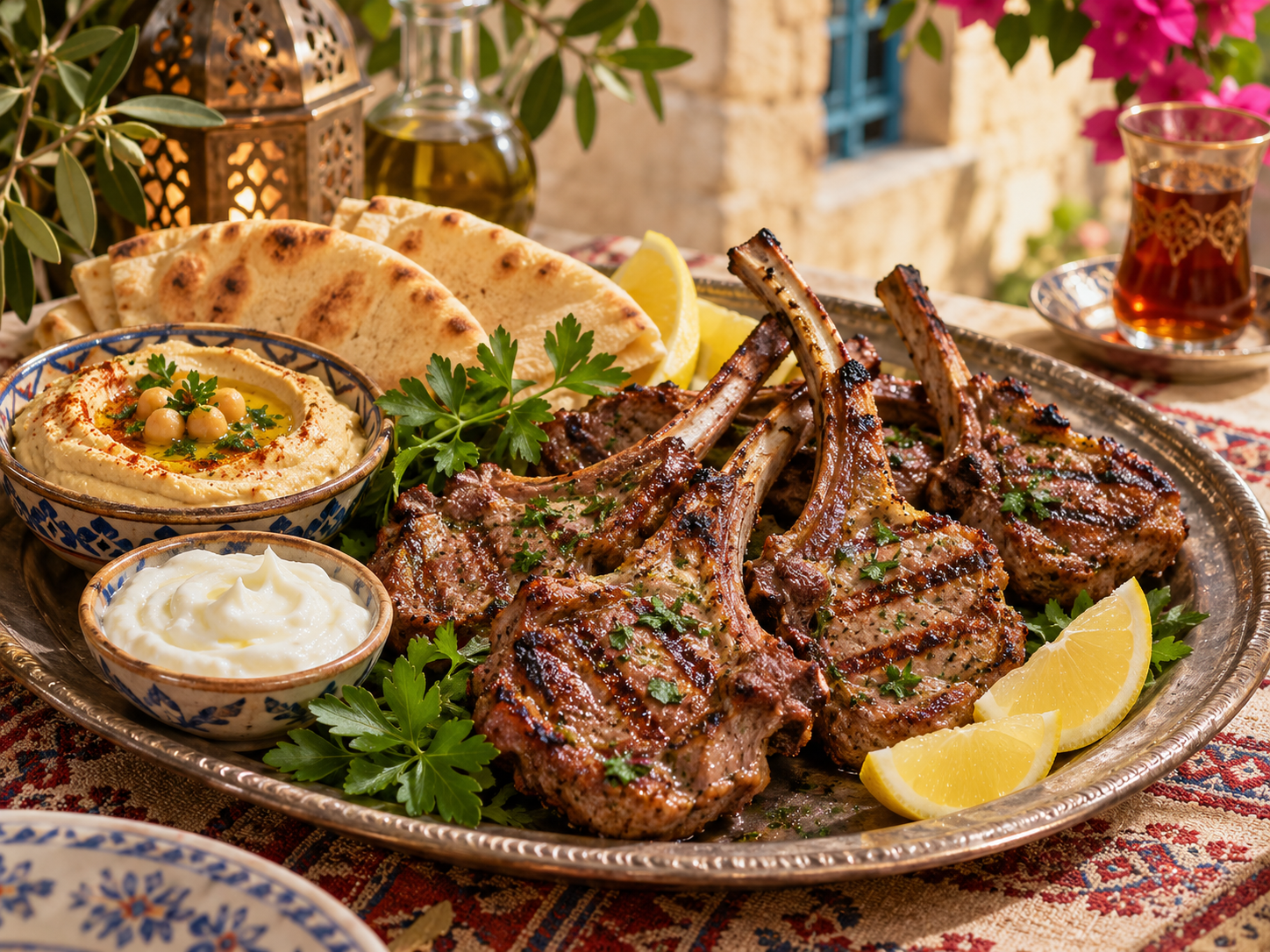
One familiar preparation involves seasoning lamb chops with olive oil, lemon juice, garlic, black pepper, and herbs before grilling them over charcoal or another hot cooking surface.
Recipes vary considerably.
Some cooks use allspice, cinnamon, cumin, or coriander, while certain variations introduce the sweet-tart flavor of pomegranate molasses.
The outside develops an appetizing browned crust, while the meat can remain beautifully juicy.
Depending on the meal, the lamb may be accompanied by pita bread, hummus, toum — the famous garlic sauce — or fresh vegetables.
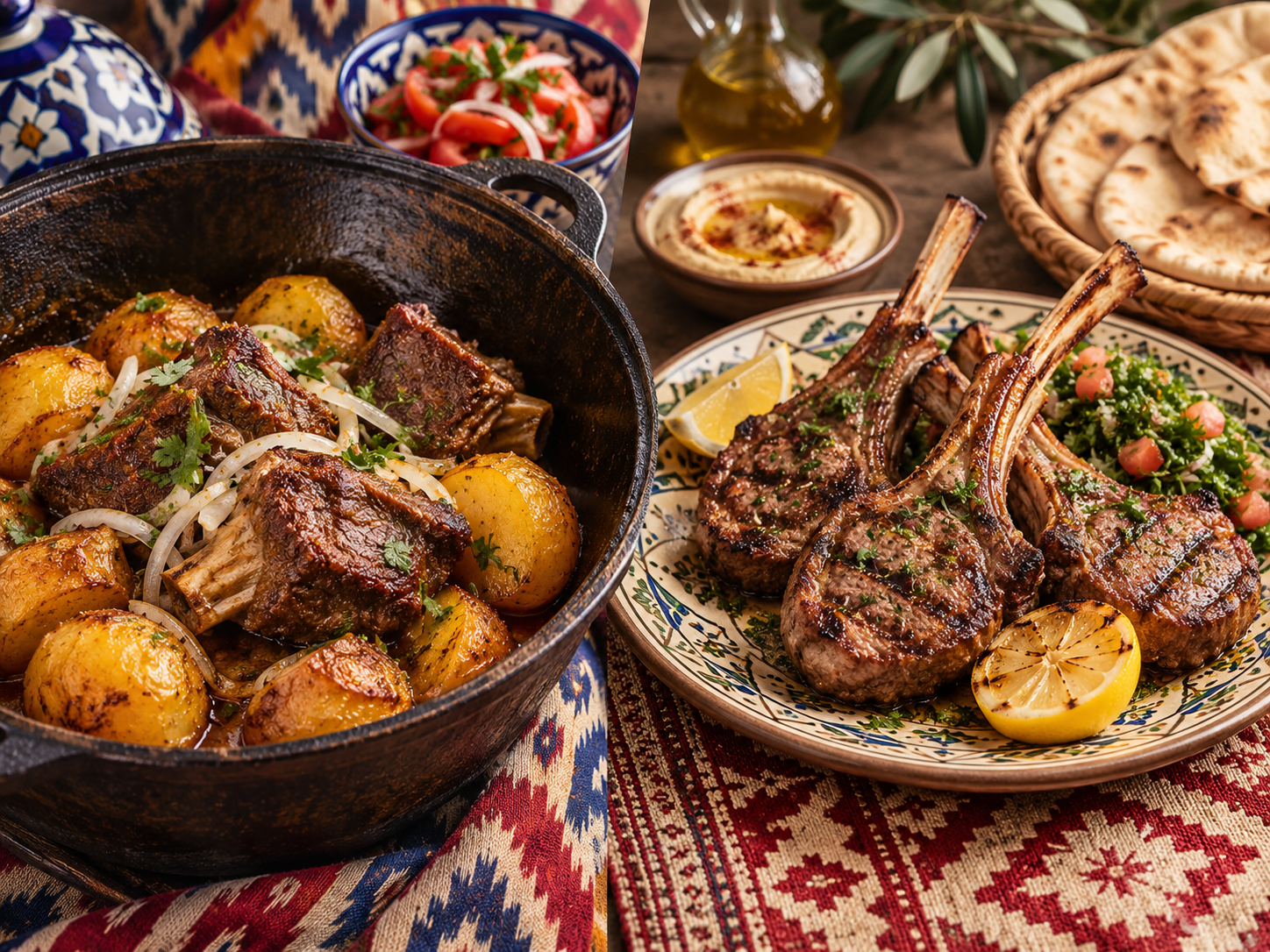
Unlike kazan kebab, which is cooked in a covered cauldron, grilled kastaleta expresses its flavor more directly through fire and seasoning.
The cooking methods are different.
And yet, I cannot help noticing a certain resemblance.
Both dishes celebrate substantial cuts of meat and the pleasure of enjoying their natural richness.
Another Connection Beneath the Grape Leaves
The comparison becomes even more interesting when we look at another traditional dish from the Levant.
Warak Enab, or stuffed grape leaves.
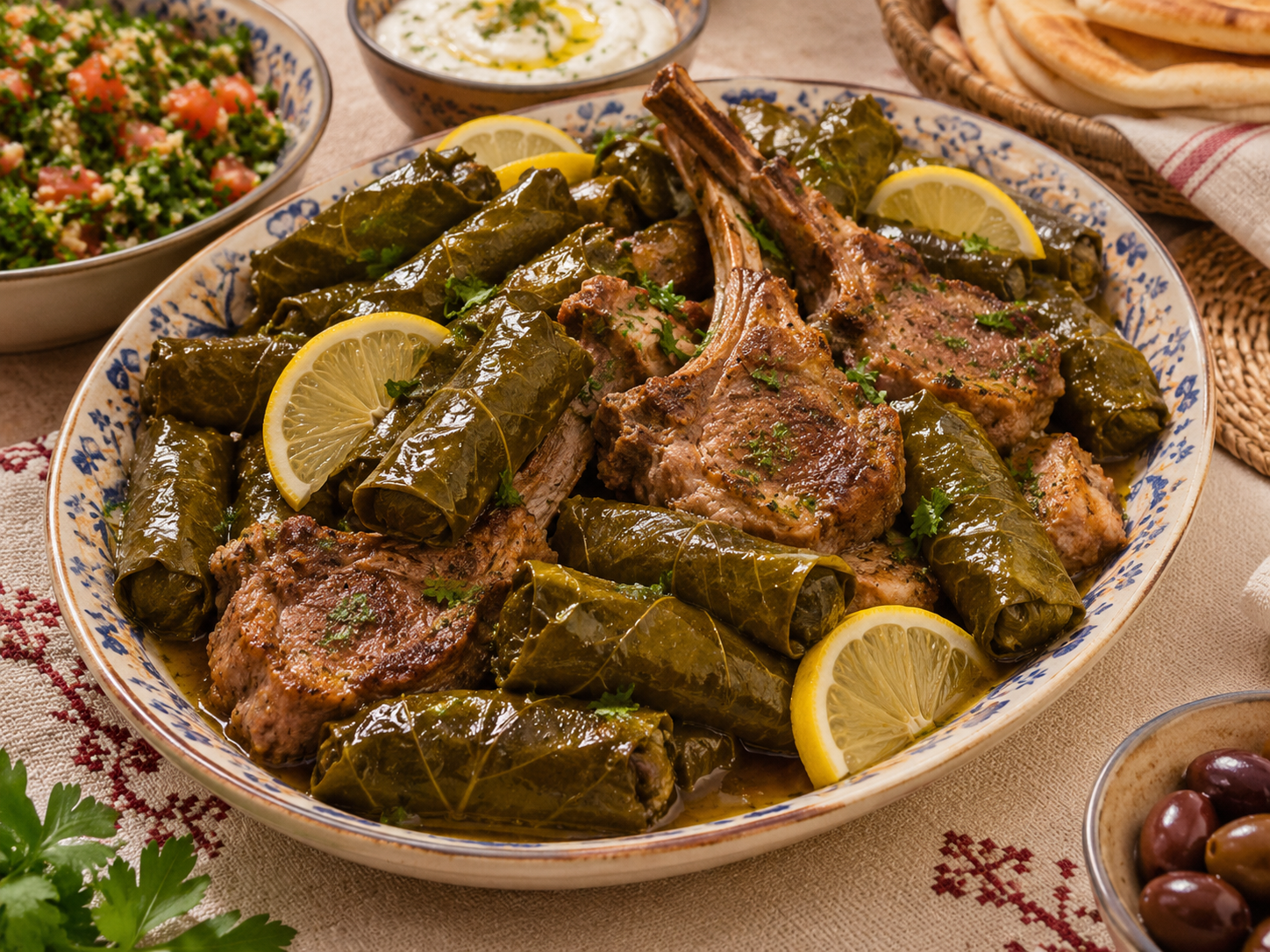
In Lebanon and neighboring regions, grape leaves are filled with rice, minced meat, and seasonings, then rolled tightly and cooked in a pot.
Some traditional preparations place lamb chops at the bottom of the pot and arrange the stuffed grape leaves above them.
This dish may be described as Warak Enab with Lamb Chops. Related Arabic recipe names also include the word kastaleta.
As the pot cooks slowly, the grape leaves, rice, lamb, broth, and seasonings exchange their flavors.
This was the connection that particularly caught my attention.
Of course, the dish is not identical to Uzbek kazan kebab.
Kazan kebab emphasizes meat and potatoes, often browned before being slowly finished in a covered cauldron.
Warak Enab with lamb chops combines stuffed vine leaves, rice, meat, lemon, and cooking liquid.
Their ingredients and culinary identities are distinct.
Yet both demonstrate how gentle cooking in a covered pot can transform substantial cuts of meat into something tender and deeply flavorful.
Different ingredients. Different traditions.
A surprisingly familiar cooking principle.
An Unexpected Connection at the Dinner Table
Not long ago, I had the pleasure of dining at an Uzbek halal restaurant with a Lebanese religious leader whom I know personally and an Uzbek acquaintance.
I ordered kazan kebab.
As I looked at the generous pieces of meat and potatoes on my plate, I found myself thinking about Lebanese kastaleta.
I turned to my Lebanese companion and asked:
“Doesn't this Uzbek kazan kebab remind you a little of Lebanese kastaleta?”
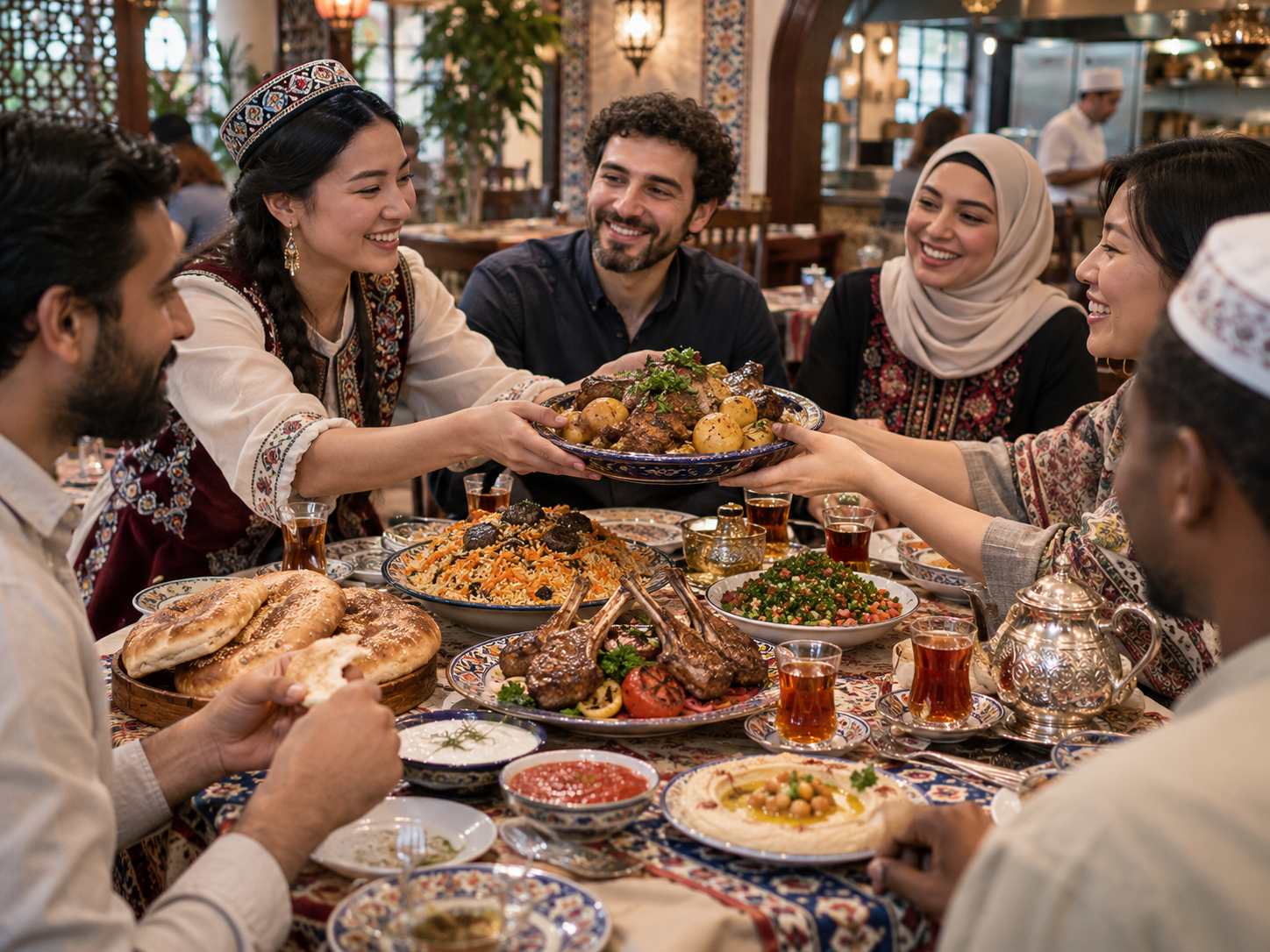
He laughed and warmly agreed with the comparison.
It may have been a small exchange.
But moments like that are precisely why I enjoy exploring different food cultures.
Three people from different cultural backgrounds were sharing a meal, and a single dish became the starting point for a conversation about something familiar.
We grew up with different languages, different surroundings, and different culinary traditions.
Yet there we were, recognizing similarities across those differences.
Food had become a language of its own.
Different Lands, Familiar Tables
Uzbek kazan kebab and Lebanese kastaleta are not the same dish.
One is associated with the heavy cauldrons of Central Asia. The other is often prepared over the grill in the eastern Mediterranean.
And in another Levantine tradition, lamb chops may be gently cooked beneath layers of stuffed grape leaves.
I would not claim that these dishes share a direct historical origin.
What fascinates me is something more subtle.
People living in distant places have developed different recipes around ingredients, techniques, and the pleasures of eating together that can feel unexpectedly familiar.
The more halal food cultures I explore, the more often I encounter these connections.
They remind me that the differences between communities are real, but so are their similarities.
Perhaps our shared humanity is not found only in grand philosophical statements.
Sometimes it can be discovered in much smaller moments.
A large cauldron. A plate of lamb chops.
A few people from different countries laughing around the same table.
And for a moment, the world feels a little smaller.
Isn't that fascinating?