SALINK Founder · 2026-11-09
Saudi Kabsa vs Uzbek Osh: Different Flavors, Shared Hospitality
Different Lands, Similar Tables — Two Iconic Rice Dishes and the Traditions of Generosity That Bring People Together
Saudi Kabsa vs Uzbek Osh: Different Flavors, Shared Hospitality
Different Lands, Similar Tables — Two Iconic Rice Dishes and the Traditions of Generosity That Bring People Together
Introducing a Jordanian Friend to "Uzbekistan's Kabsa"
Recently, a Jordanian friend of mine spent about three weeks traveling around South Korea.
During her visit, she experienced Uzbek halal cuisine for the very first time, thanks to an introduction I arranged.
A friend of mine from Uzbekistan, who runs a halal restaurant in Daejeon, generously treated us to a selection of traditional Uzbek dishes.
Among them was Osh, also known as Palov or Plov, one of Uzbekistan's most beloved rice dishes.
Since my Jordanian friend had never tried it before, I wanted to explain it in a way that would immediately feel familiar.
So I told her:
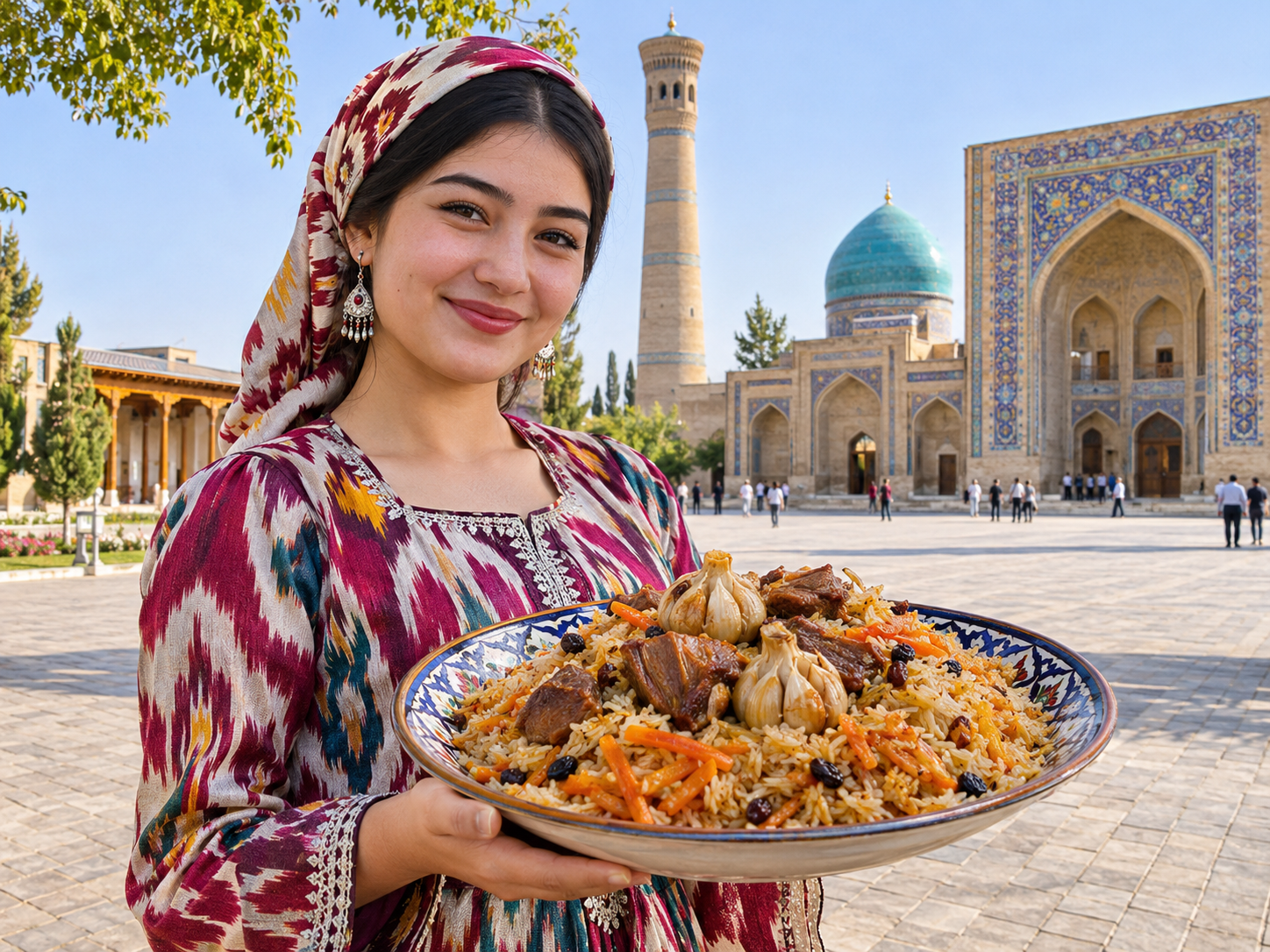
"Think of it as Uzbekistan's version of Kabsa."
She understood almost instantly.
After all, Kabsa is a familiar rice dish across Saudi Arabia and the Arabian Peninsula, and my comparison helped her connect something entirely new with a food tradition she already knew.
Of course, Osh and Kabsa are not identical.
Their ingredients, seasonings, and cooking techniques differ in fascinating ways.
Yet the two dishes occupy surprisingly similar places in their respective cultures. Both are hearty rice-and-meat dishes associated with generosity, hospitality, and bringing people together.
That day, my friend was captivated by the rich, hearty flavors of Uzbek cuisine.
The satisfying combination of tender meat, fragrant rice, and the gentle sweetness of carrots offered her a completely new culinary experience.
Before leaving Korea, she told me that she hoped to return around late spring or early summer the following year.
And when she did, she wanted to eat Uzbek food again.
She also hoped to reunite with our Uzbek friends and spend another memorable evening together.
I find moments like these particularly meaningful.
There is something wonderful about watching someone discover an unfamiliar food and recognize something surprisingly familiar within it.
Discovering the Bold Flavors of Central Asia
Let me take you back about four years.
At the time, I was searching for halal food beyond the Indian, Pakistani, and Turkish dishes that had already become relatively familiar to me in South Korea.
I wanted to discover something different.
That curiosity eventually led me to the food cultures of Uzbekistan and its neighboring Central Asian countries.
It felt like entering an entirely new culinary world.
These were not simply variations of the curries and kebabs I had previously enjoyed.
The dishes seemed hearty, generous, and wonderfully straightforward.
They possessed a rustic richness that reminded me of the immense landscapes of Central Asia.
One memorable example was Kazan Kebab (Qozon Kabob), the cauldron-cooked meat dish I introduced in an earlier SALINK Journal essay.
But another dish quickly captured my attention.
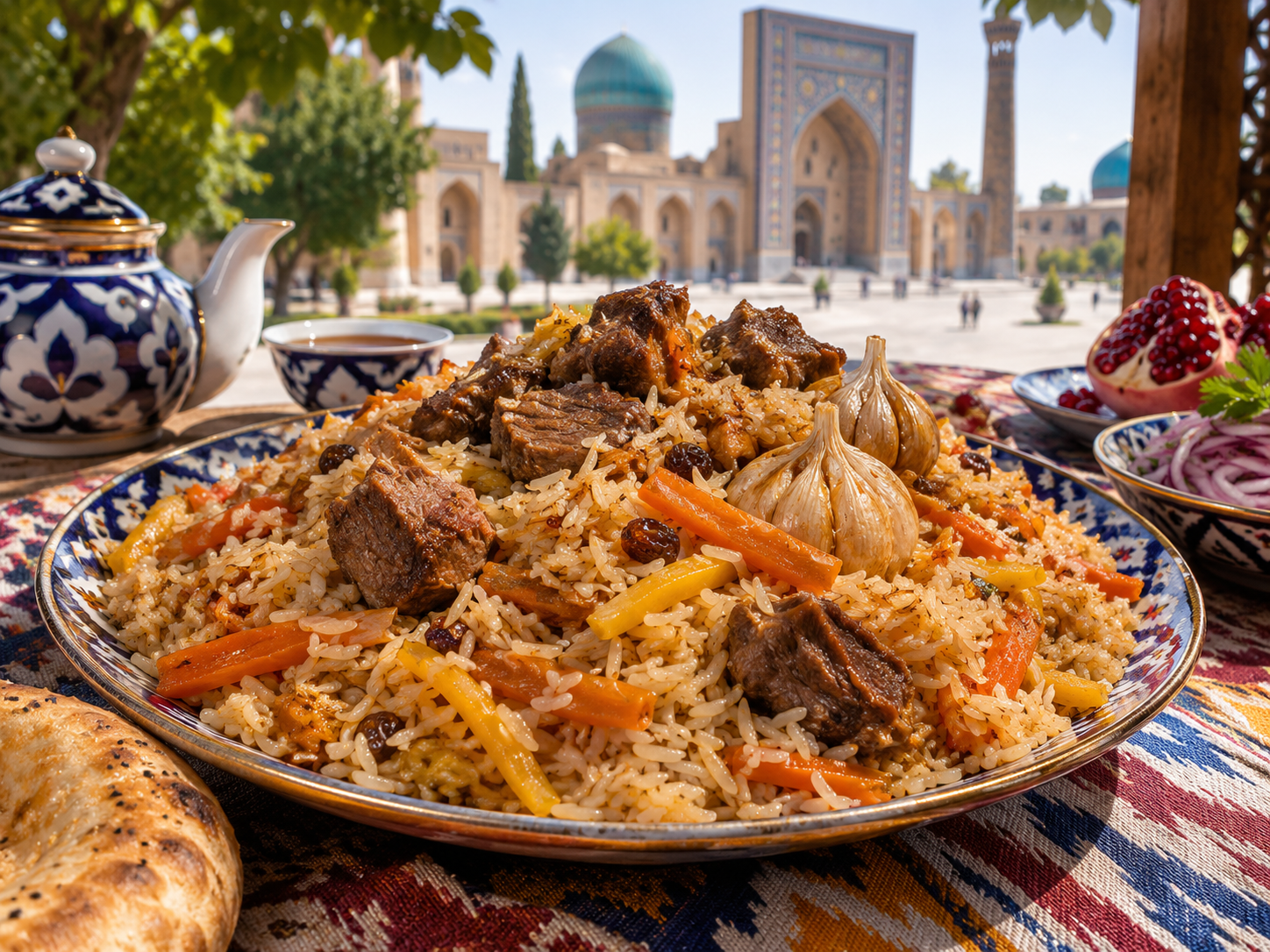
Osh, the iconic Uzbek rice dish.
To describe Osh as merely rice cooked with meat and vegetables would be to overlook much of its cultural importance.
For many Uzbeks, it is closely connected to family traditions, major life events, and the collective memories of their communities.
Osh is served at weddings and celebrations surrounding the birth of a child. It is also prepared for Navruz, the spring festival celebrated across Central Asia, and at gatherings held to remember those who have passed away.
It is equally associated with welcoming respected guests.
In other words, Osh is both an everyday meal and a symbol of communal life.
Its cultural significance is so great that Uzbekistan's Palov culture and tradition was inscribed on UNESCO's Representative List of the Intangible Cultural Heritage of Humanity in 2016.
Osh is prepared in ordinary households, but the scale can become extraordinary during weddings, festivals, and large community gatherings.
Specialist cooks may prepare hundreds of portions in enormous metal cauldrons called qozon.
Although men have traditionally played a prominent role in large-scale public preparation, the knowledge of cooking Palov is also preserved and passed down through families and everyday home cooking.
Imagine the scene.
A giant cauldron sits over a blazing fire.
Meat, carrots, onions, and rice are prepared in generous quantities.
As the ingredients cook, their aromas spread through the gathering.
People wait, talk, laugh, and eventually sit down to share a meal.
For me, Osh represents something larger than the ingredients on the plate.
It is the generous spirit of Central Asia expressed through a single cauldron of rice.
Saudi Kabsa: The Generous Rice Dish of Arabia
Now let us travel southwest from Central Asia to the Arabian Peninsula.
There, we encounter another remarkable rice dish: Kabsa (كبسة).
Saudi Arabia, home to the holy cities of Mecca and Medina, has an exceptionally rich culinary heritage shaped by regional traditions, trade, and hospitality.
Kabsa is one of the country's most recognizable dishes.
Like Uzbek Osh, it is eaten in everyday life while also playing an important role at weddings, celebrations, family gatherings, and occasions when honored guests are welcomed.
One of the most memorable aspects of Kabsa is its generous presentation.
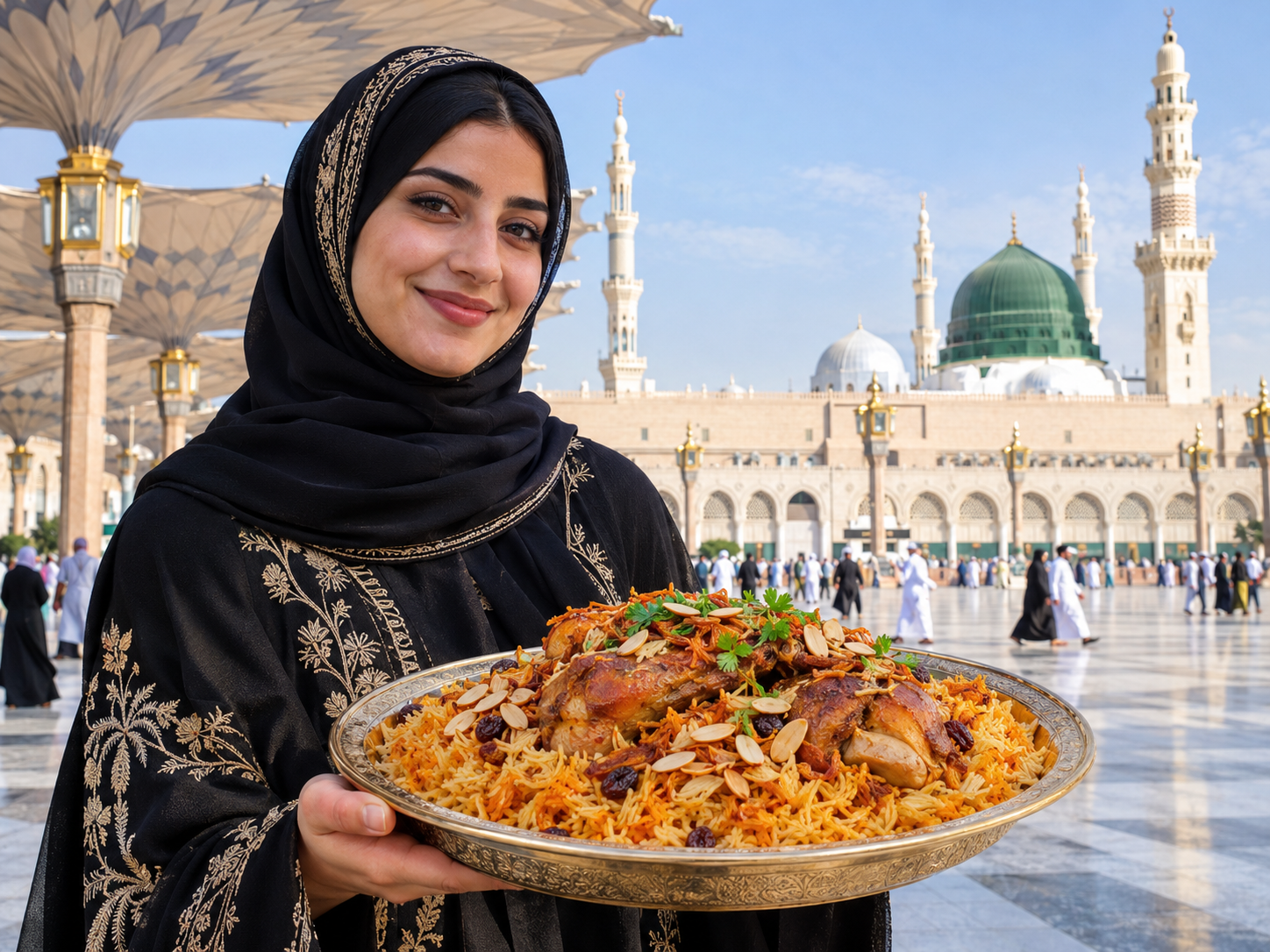
A large serving platter may be filled with fragrant rice, topped with substantial portions of chicken or lamb.
For especially large celebrations, a whole cooked lamb may be presented over an enormous quantity of rice.
The spectacle alone communicates abundance.
In some traditional dining settings, guests sit together around a large shared platter, eating from the portions closest to them.
Eating with the right hand is also a familiar custom in many parts of the Arabian Peninsula, although individual dining practices naturally vary.
The significance goes beyond the food itself.
A host wants the guests to feel welcomed, respected, and generously provided for.
There should be enough to share.
Sometimes, there may even be more food than everyone can finish.
To me, this expresses a beautiful aspect of hospitality.
And it is here that Saudi Kabsa begins to resemble Uzbek Osh.
Two different rice dishes, from two different regions, yet both carry the desire to welcome others with generosity.
The Fragrant Spices of Kabsa and the Rich Simplicity of Osh
So how do these dishes actually compare?
Let us begin with what they have in common.
Both are built around rice and meat, and both can be prepared in quantities large enough for an entire gathering.
The cooking process allows the rice to absorb flavors from the meat, cooking liquid, vegetables, spices, and fat.
But the way those flavors are developed can be remarkably different.
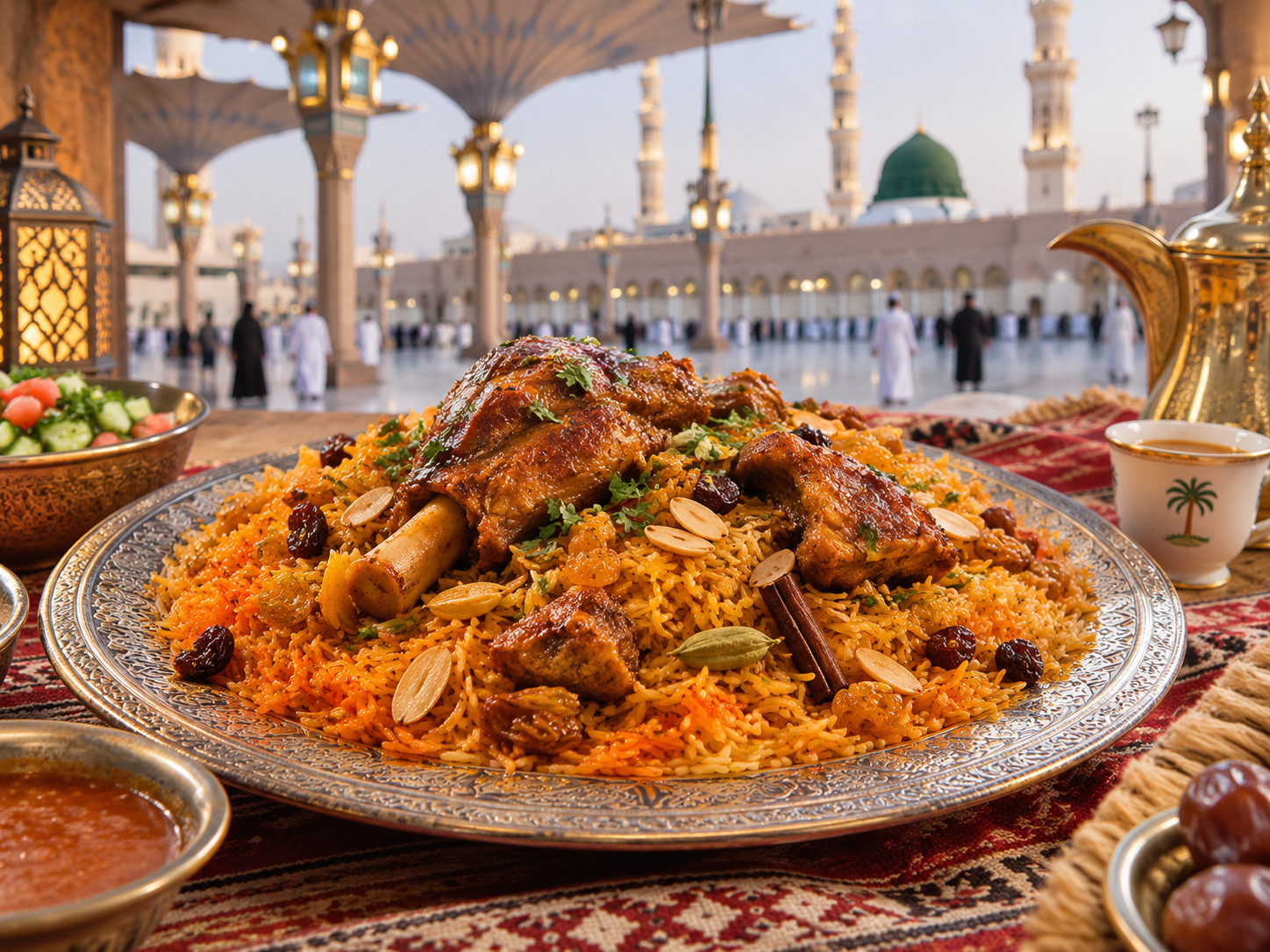
Saudi Kabsa is particularly celebrated for its complex aromatic seasoning.
Depending on the region and recipe, its spice mixture may include cardamom, cinnamon, cloves, bay leaves, and dried black lime, commonly known as loomi.
Some preparations also incorporate saffron.
Tomatoes or tomato paste often contribute color and a savory depth, giving the rice its characteristic reddish or brownish appearance in many versions.
The finished dish may also be garnished with toasted almonds, pine nuts, or raisins.
These ingredients can create an intricate combination of fragrant, savory, tangy, and subtly sweet flavors.
For me, the distinctive attraction of Kabsa lies in this layered aroma.
It is a dish in which the spices help shape the identity of the rice.
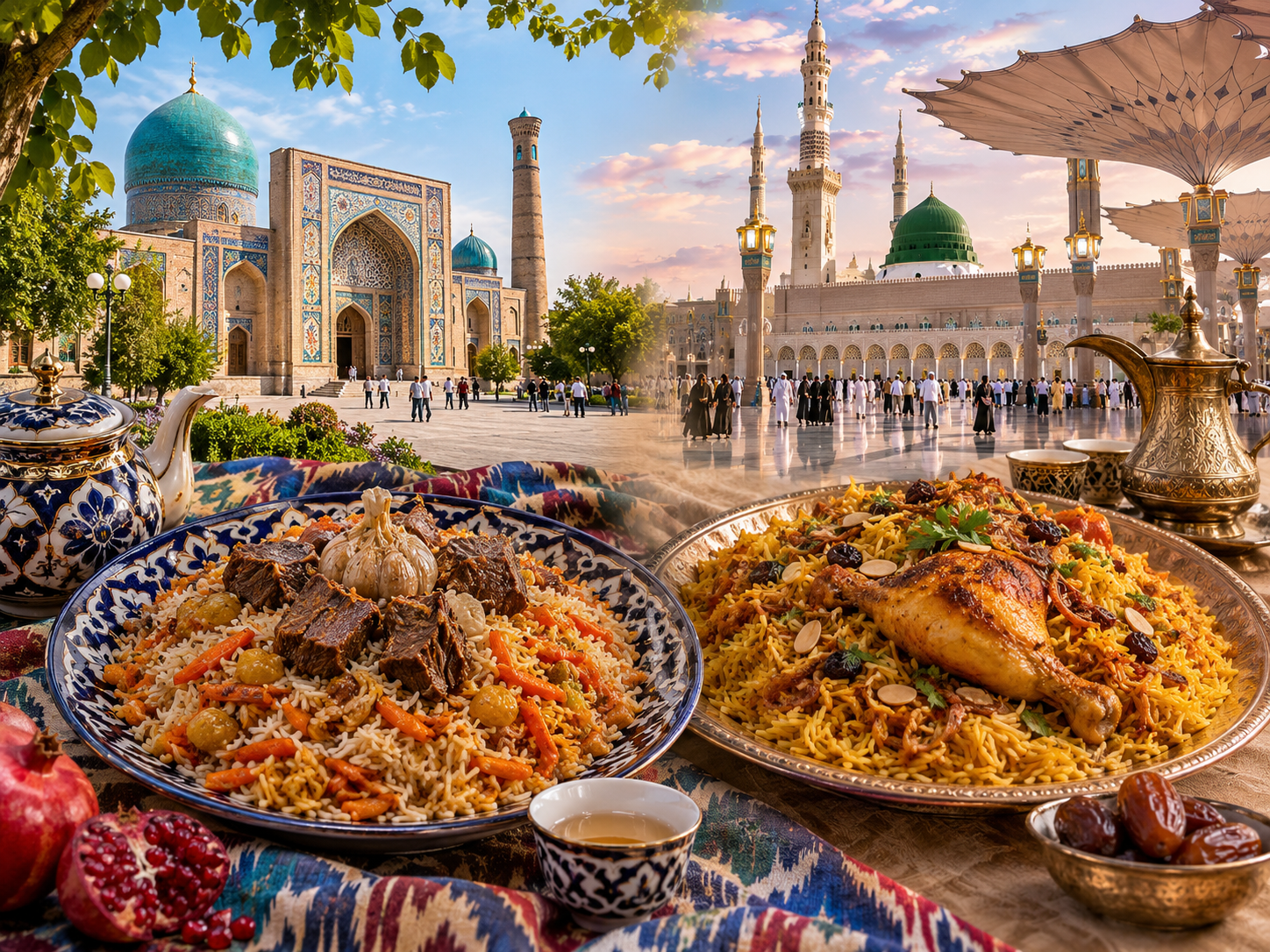
Uzbek Osh, on the other hand, expresses its richness through a somewhat different balance.
Cumin, known as zira in Central Asia, is particularly important.
Whole garlic bulbs, black pepper, and coriander seeds may also contribute flavor.
Yet the most memorable qualities of Osh often come from the meat, the cooking fat, the rice, and the extraordinary amount of carrots used in many recipes.
And when I say carrots, I mean plenty of carrots.
Long strips of yellow or orange carrots are added in generous quantities, sometimes approaching the amount of other major ingredients.
As the carrots cook, they release a delicate natural sweetness.
Some regional recipes include raisins for an additional sweet note.
The result is a beautiful contrast between the savory richness of the meat and the gentle sweetness of the vegetables.
Kabsa and Osh therefore offer two different approaches to building flavor.
One often emphasizes the intricate aromas of a diverse spice mixture.
The other draws much of its character from the satisfying richness of meat, carrots, fat, and carefully seasoned rice.
Both approaches can produce something extraordinary.
Two Different Ways to Cook Rice and Meat
The preparation methods are just as interesting.
Uzbek Osh is traditionally cooked in a large cauldron.
The cook begins by heating vegetable oil or animal fat, often using it to brown the meat and cook the onions and carrots.
These ingredients form the richly flavored foundation known as zirvak.
Water and seasonings are added, allowing the mixture to develop its characteristic depth.
Rice is then arranged above the meat and vegetables and cooked with carefully measured liquid.
As the rice absorbs moisture and finishes steaming, the flavors of the zirvak become part of the dish.
The result is rice that carries the aroma of the meat, cooking fat, and vegetables.
People unfamiliar with Osh sometimes compare it to fried rice.
However, the comparison is not entirely accurate.
Unlike fried rice, which usually begins with previously cooked rice, Osh is more closely related to the wider family of pilaf dishes, where uncooked rice is prepared in a seasoned cooking liquid.
The rice is not simply fried after being cooked.
It develops its flavor as part of the cooking process itself.
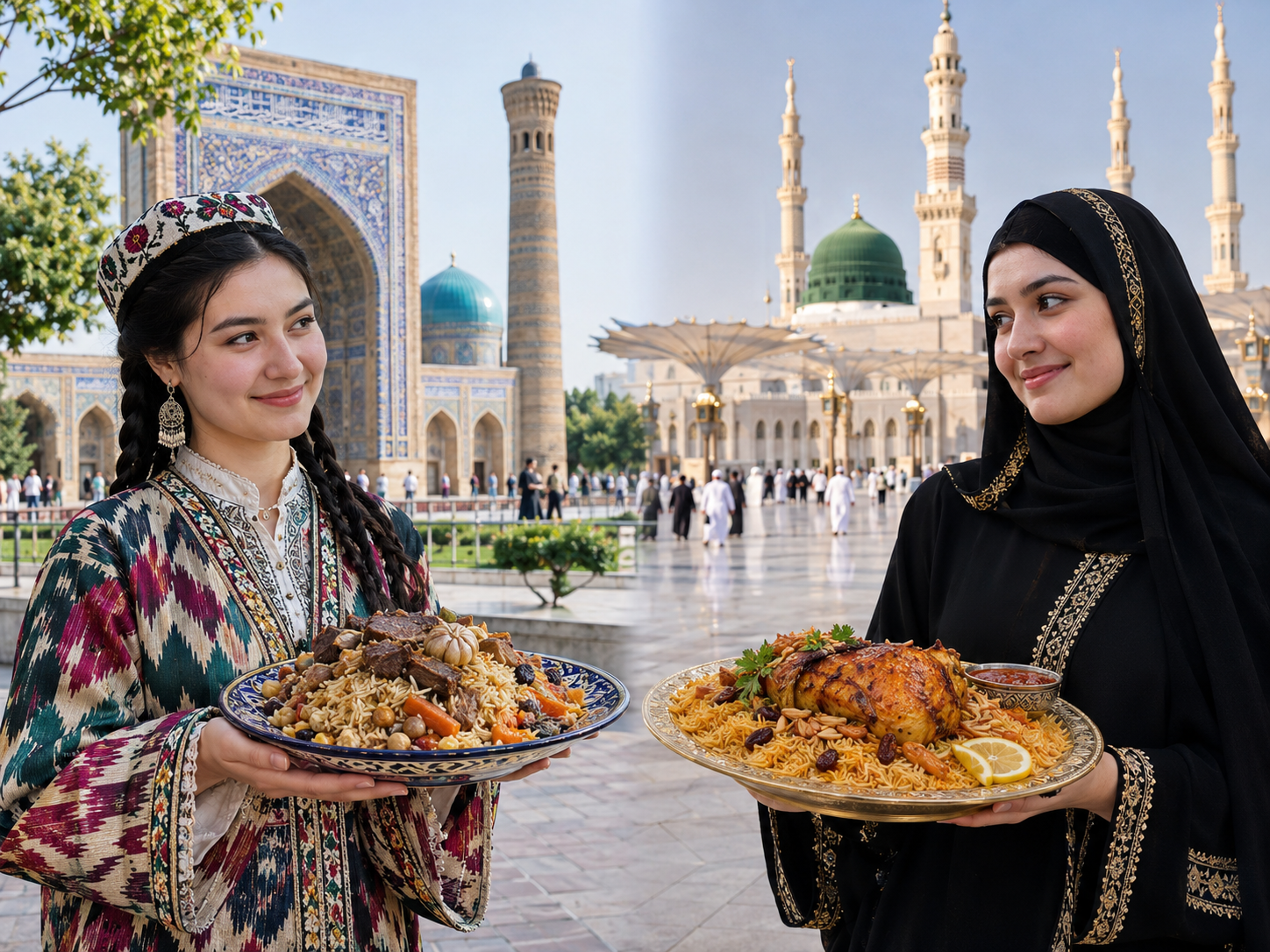
Saudi Kabsa commonly follows a different approach.
Meat or chicken is cooked with onions, tomatoes, spices, and liquid to produce a deeply seasoned broth.
The rice absorbs this broth as it cooks.
Some recipes cook the meat and rice together, while others finish the meat separately before arranging it on top of the rice.
Both methods can produce a beautifully fragrant meal.
If I were to describe the difference in my own words, I would say this:
Uzbek Osh celebrates the richness of meat, fat, and carrots, while Saudi Kabsa often highlights the aromatic depth of spices and broth.
Of course, this is a broad culinary comparison rather than an absolute rule.
Not every serving of Osh is particularly oily, and not every Kabsa is light.
Regional traditions, family recipes, personal preferences, and the skill of the cook all influence the final result.
But the versions I have encountered through my halal food journeys have demonstrated these different culinary personalities beautifully.
Different Rice, a Shared Culture of Hospitality
When I compare Saudi Kabsa and Uzbek Osh, I see two dishes that are both similar and wonderfully different.
Their names are different.
Their characteristic seasonings are different.
Their techniques and finished flavors are different.
Yet the roles they play in people's lives are remarkably familiar.
When guests arrive, families prepare something special.
When a wedding or celebration takes place, food is made in generous quantities.
When relatives and friends gather, a large shared meal becomes an opportunity to strengthen relationships.
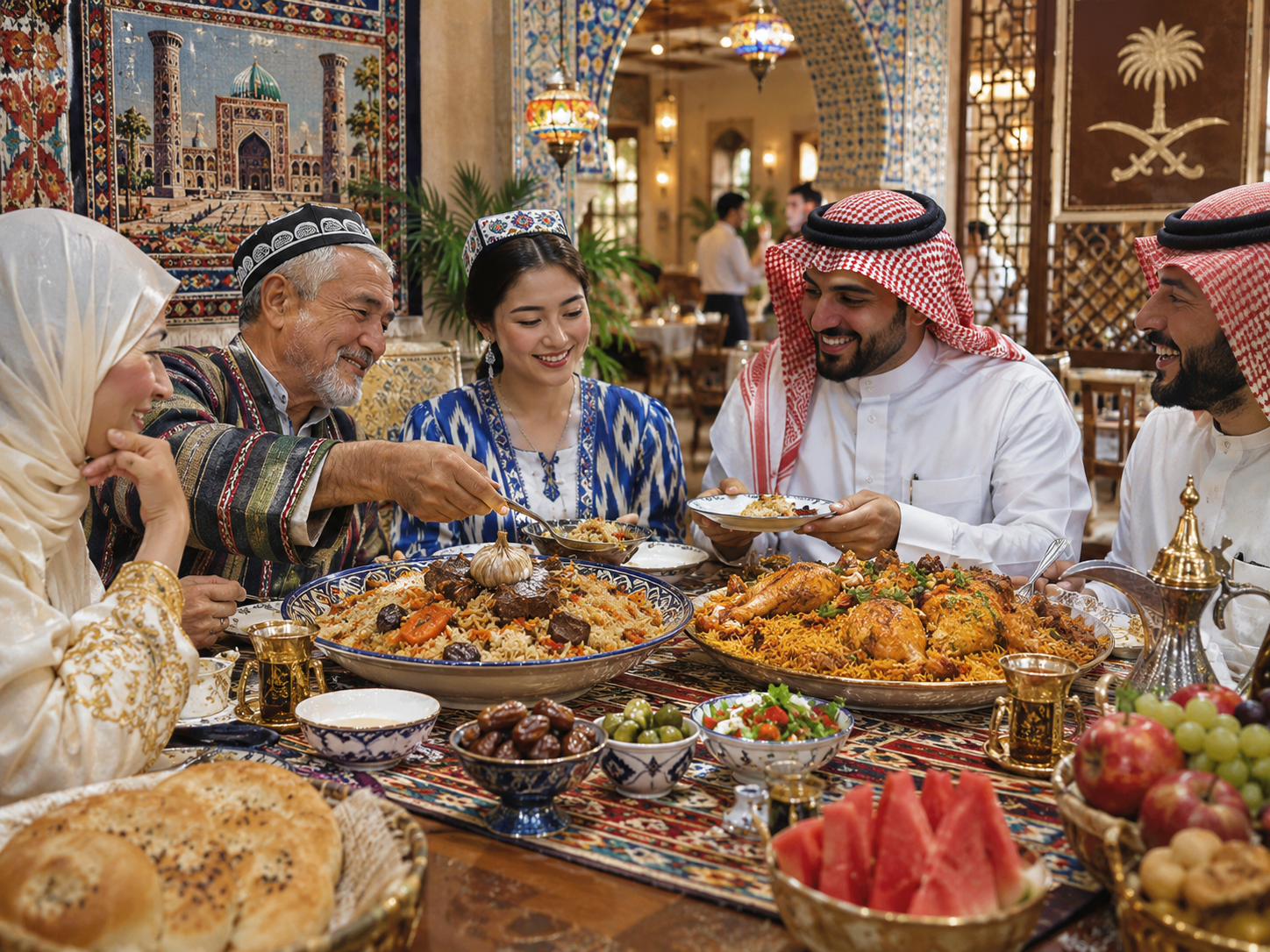
Food is not merely something consumed to satisfy hunger.
It also helps people express affection, respect, gratitude, and belonging.
This is one of the things I find especially moving about exploring the food cultures of Muslim communities around the world.
Across many different societies, I repeatedly encounter traditions in which generosity at the table carries profound social meaning.
Naturally, Uzbekistan and Saudi Arabia are not culturally identical simply because both have large Muslim populations.
Their languages, histories, landscapes, and regional customs differ greatly.
Nor should their diverse traditions be reduced to a single expression of Islamic hospitality.
Yet some human values are recognizable across those differences.
The desire to welcome a guest.
The pleasure of sharing something delicious.
The wish to make another person feel that they belong.
These emotions require very little translation.
One Meal, and a World That Feels Smaller
I think back to that meal with my Jordanian friend in Daejeon.
She encountered Uzbek Osh for the first time.
I explained it by comparing it to a familiar Arabian rice dish.
She recognized the connection, tasted the food, and discovered something she loved.
By the end of her visit, she was already talking about returning to Korea and sharing another meal with our Uzbek friends.
It was a simple experience.
No grand speeches about cultural understanding.
No complicated discussion about international relations.
Just a group of people sharing food in a halal restaurant.
Yet I believe moments like this reveal something important.
A person can discover an unfamiliar culture through a dish that reminds them of home.
A meal can become the beginning of a conversation.
And a conversation can become the foundation of a friendship.
Perhaps that is one of food's greatest gifts.
It reminds us that cultural differences are real, but so are the experiences that bring us together.
Saudi Kabsa and Uzbek Osh.
Two rice dishes from different lands, with different flavors and traditions.
But each offers a glimpse into the generous spirit of welcoming people around a shared table.
So the next time you invite someone special to dinner, or gather with loved ones for a celebration, why not try making or sharing one of these dishes?
Place a generous platter in the center.
Sit down together.
Share the meal, the stories, and the moment.
Because good food nourishes the body, but food shared with others can remain in the heart long after the meal is over.