SALINK Founder · 2026-11-05
Culinary Cousins?! Uzbek Samsa, Indian Samosa, and Arab Sambusa
Three pastries, different cultures, and a fascinating connection through Persian culinary history
Culinary Cousins? Uzbek Samsa, Indian Samosa, and Arab Sambusa
Different lands, familiar flavors — three pastries connected by a Persian linguistic heritage.
Uzbek Samsa: A Taste of Central Asia in Korea
As I continue exploring halal food in South Korea, I often notice how unfamiliar cultures gradually become part of the everyday landscape.
Over the years, Uzbek halal restaurants and Central Asian Muslim communities have become increasingly visible in different parts of Korea.
Even in the city where I live, a drive of about ten minutes takes me to neighborhoods with Uzbek restaurants and businesses serving people from Uzbekistan and neighboring countries.
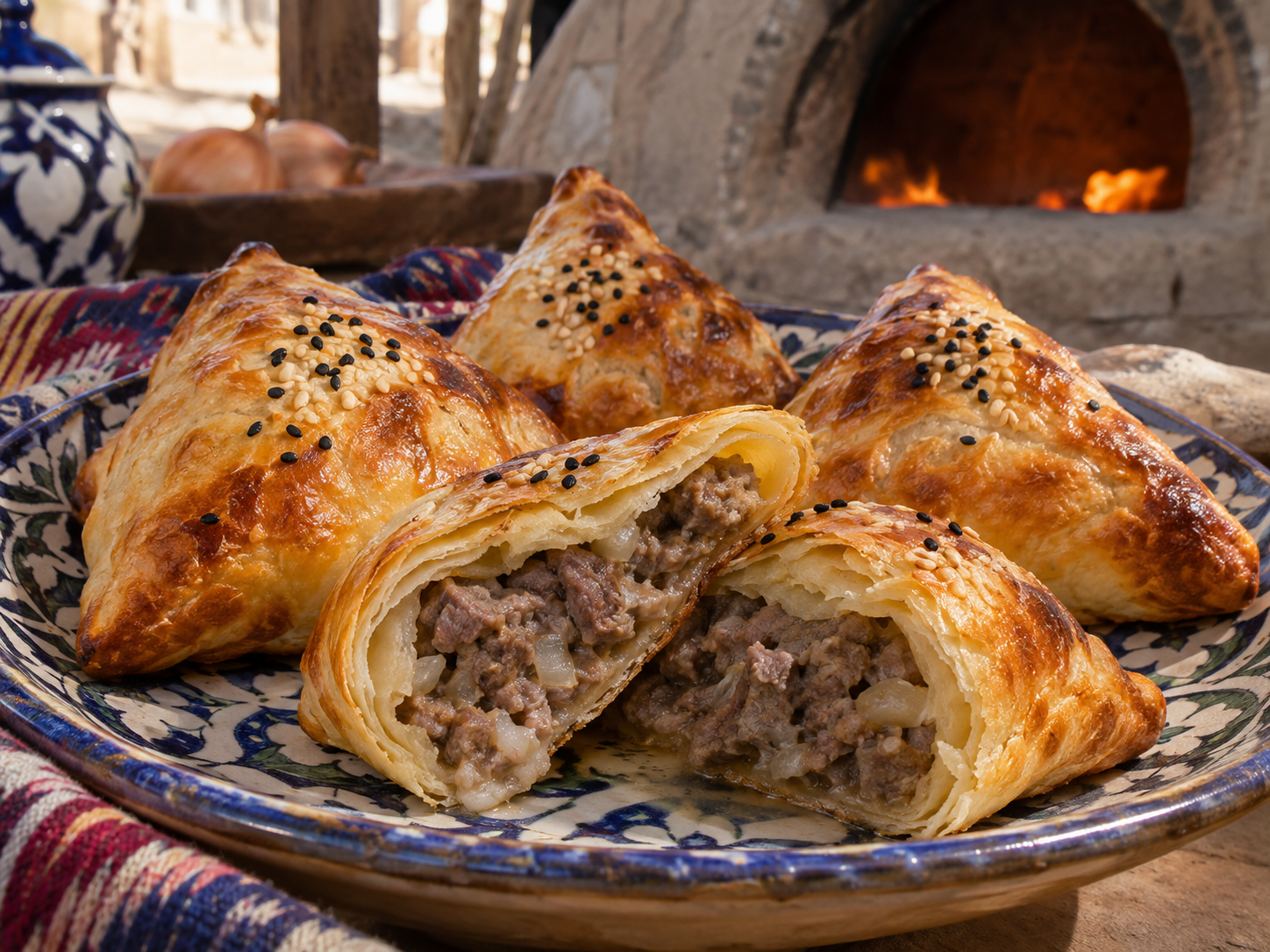
One of the most recognizable foods there is samsa, also spelled somsa in Uzbek.
Samsa is a savory pastry filled with ingredients such as lamb, beef, chicken, onions, potatoes, or pumpkin. At halal restaurants, the meat is prepared according to Islamic dietary requirements.
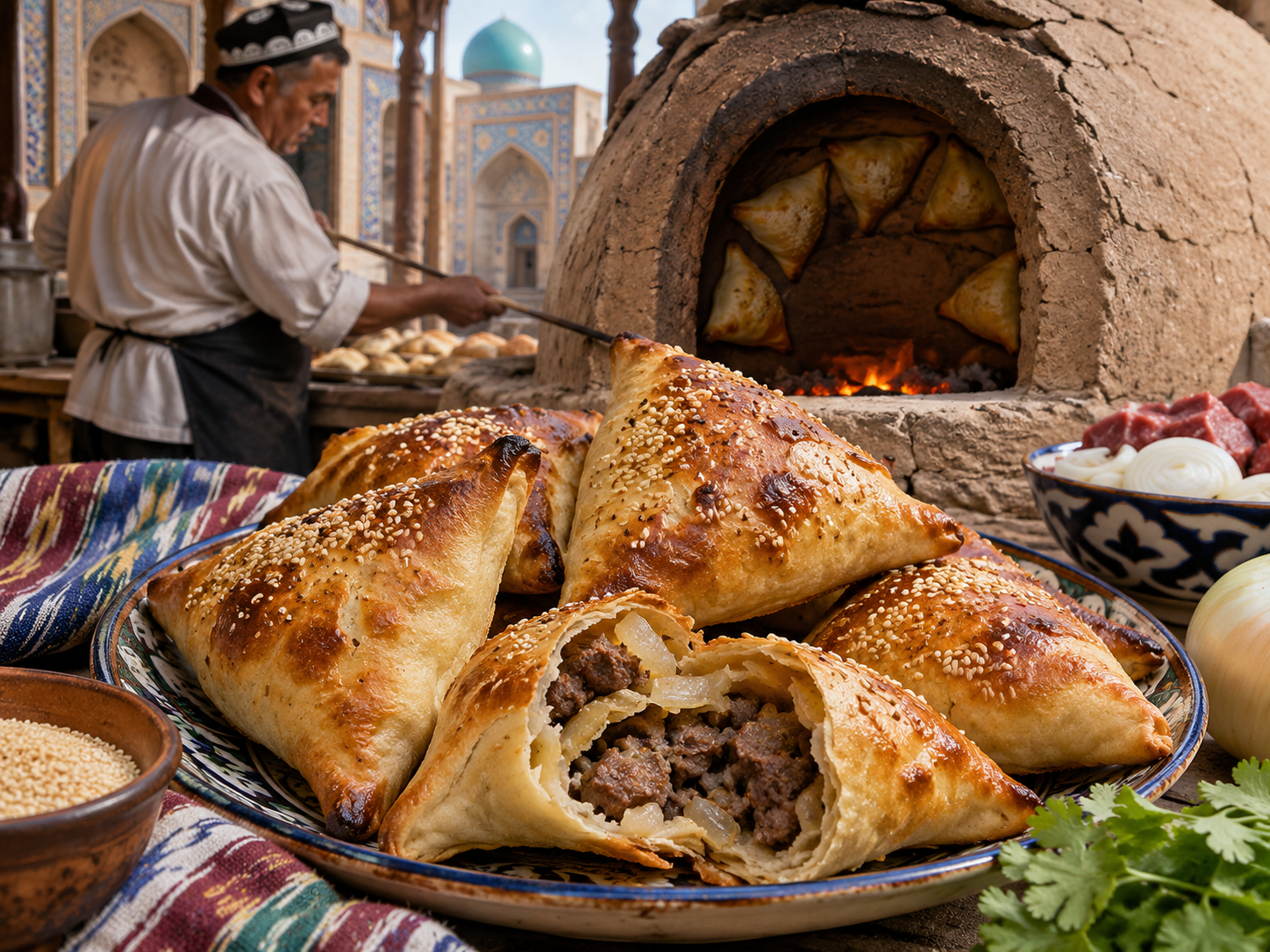
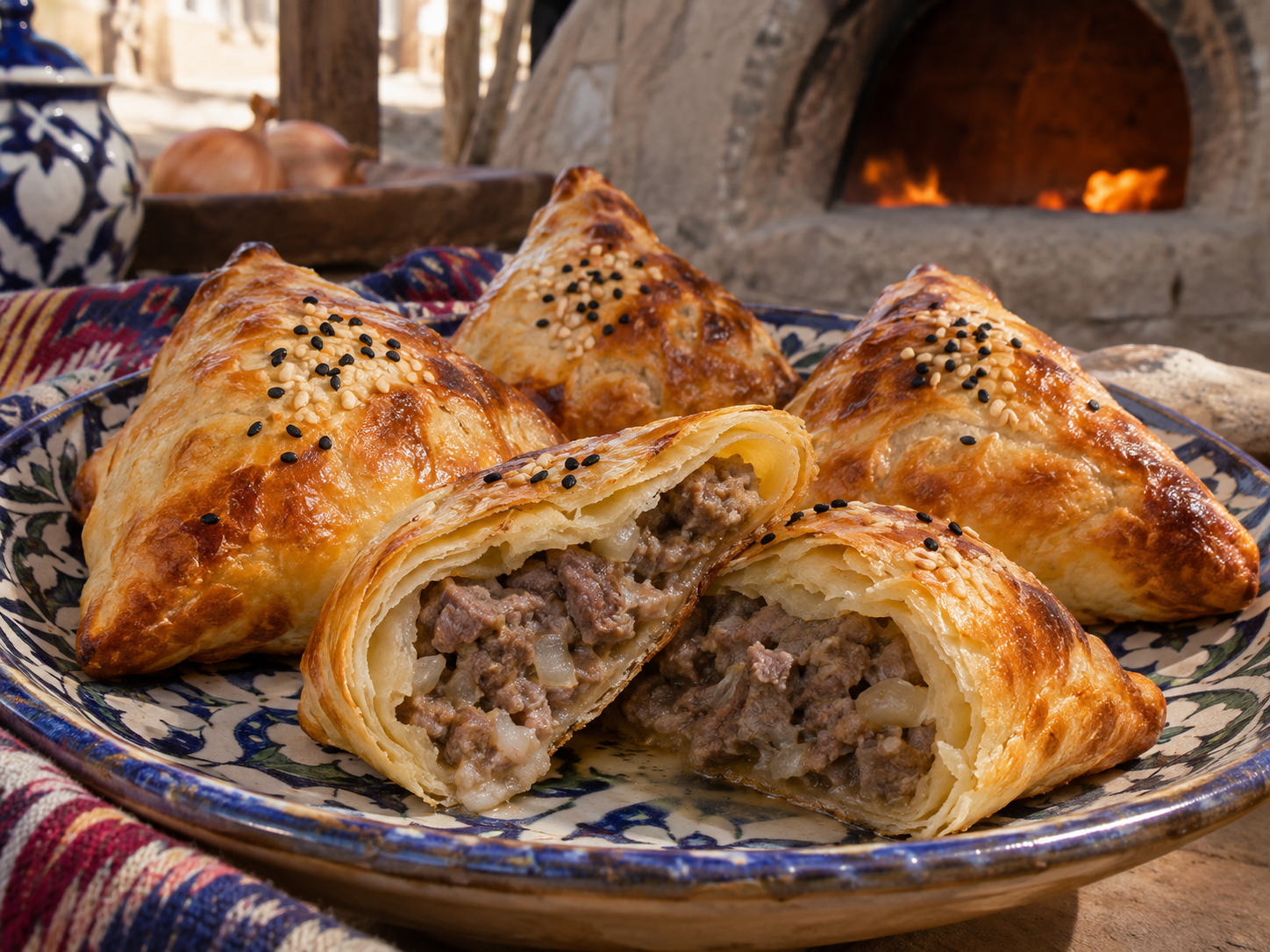
Traditionally, Uzbek samsa is baked in a clay oven called a tandir, where the pastry is attached to the hot inner walls. The result is a beautifully browned crust surrounding a rich, juicy filling.
Some samsas are surprisingly large — about the size of a man's fist, or even bigger.
At places I have visited, a samsa could cost only a few thousand Korean won. Depending on its size, one or two can be substantial enough for a simple meal.
Seeing people enjoy samsa as part of their daily routine reminds me that what may seem like an unfamiliar foreign snack to one person can be an ordinary, comforting meal to another.
Indian and Pakistani Samosa: My First Introduction to Halal Food
Whenever I eat samsa, another familiar food comes to mind: samosa, a beloved pastry in Indian and Pakistani cuisine.
Let me go back to around 2010, shortly after I completed my military service in South Korea.
That was when I first began seriously exploring halal food, mainly through Indian and Pakistani restaurants.
I had always enjoyed curry, even the instant and ready-made varieties commonly sold in Korean supermarkets. So the spices and flavors of South Asian cuisine did not feel particularly intimidating to me.
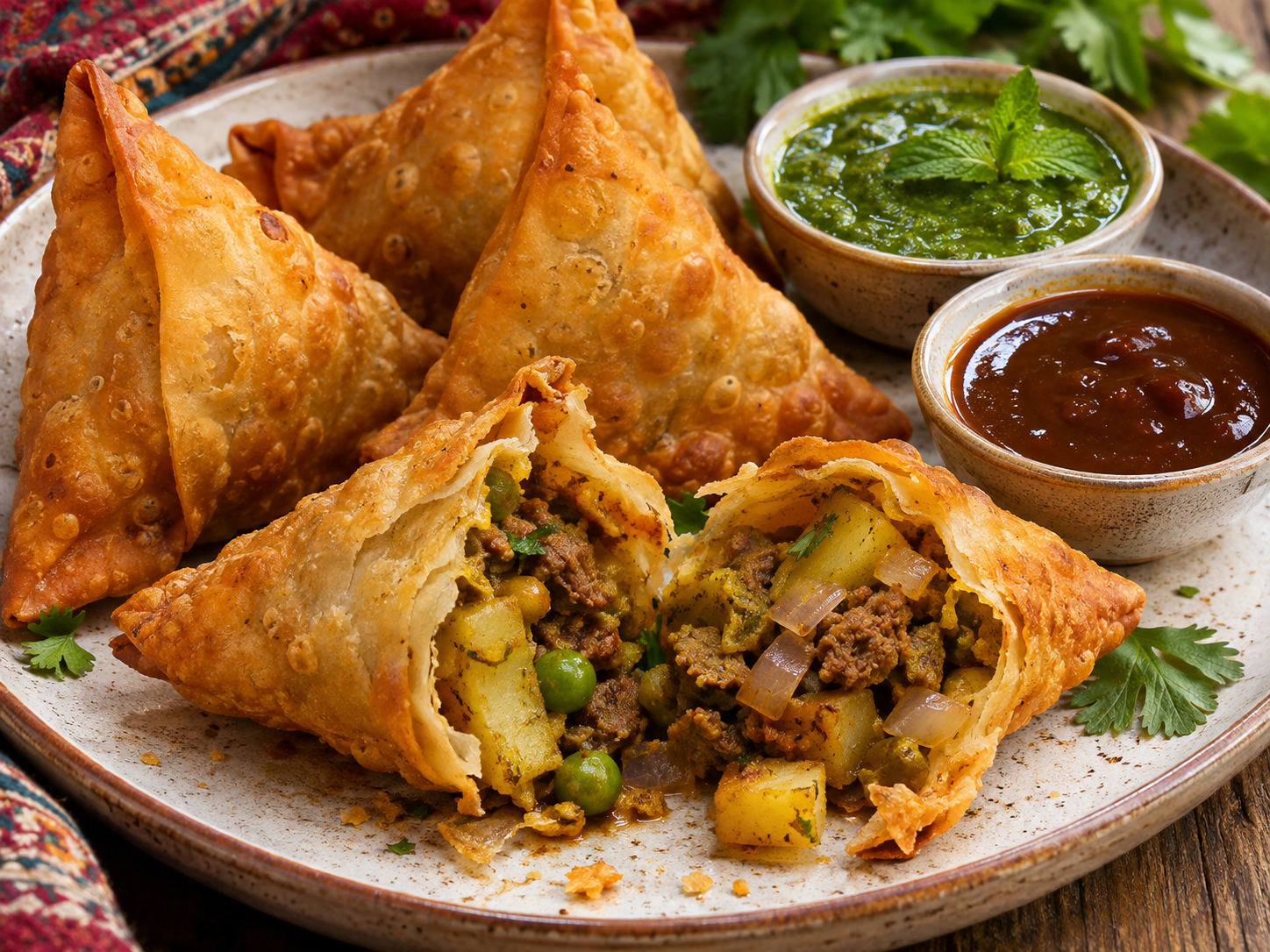
Alongside curries, tandoori chicken, and kebabs, I discovered a small triangular pastry called a samosa.
Samosas are commonly filled with mashed potatoes, peas, onions, and aromatic spices. Depending on the recipe, they may also contain lentils, minced meat, or paneer, an Indian fresh cheese.
Often deep-fried until golden and crispy, they are frequently served with chutneys that add sweetness, freshness, or heat.
The samosas I encountered were generally smaller than the hearty Uzbek samsas I knew, making them feel more like snacks or side dishes than complete meals.
Yet there was something unmistakably familiar about them.
A folded pastry, a savory filling, and seasonings that express the character of the place where the food is made.
Different flavors, but a remarkably similar idea.
Arab Sambusa: A Familiar Favorite at Ramadan Iftar
The story does not end in Central or South Asia.
Across the Arab world, we find another relative: sambusa, sometimes written samboosa. In Lebanon and other parts of the Levant, a related name is sambousek or sambusak.
These pastries are particularly associated with Ramadan, the Islamic holy month of fasting.
During Ramadan, Muslims fast from dawn until sunset, then break their fast at the evening meal known as iftar. Sambusa is a familiar addition to many iftar tables.
Its appearance varies considerably across the Arab world.
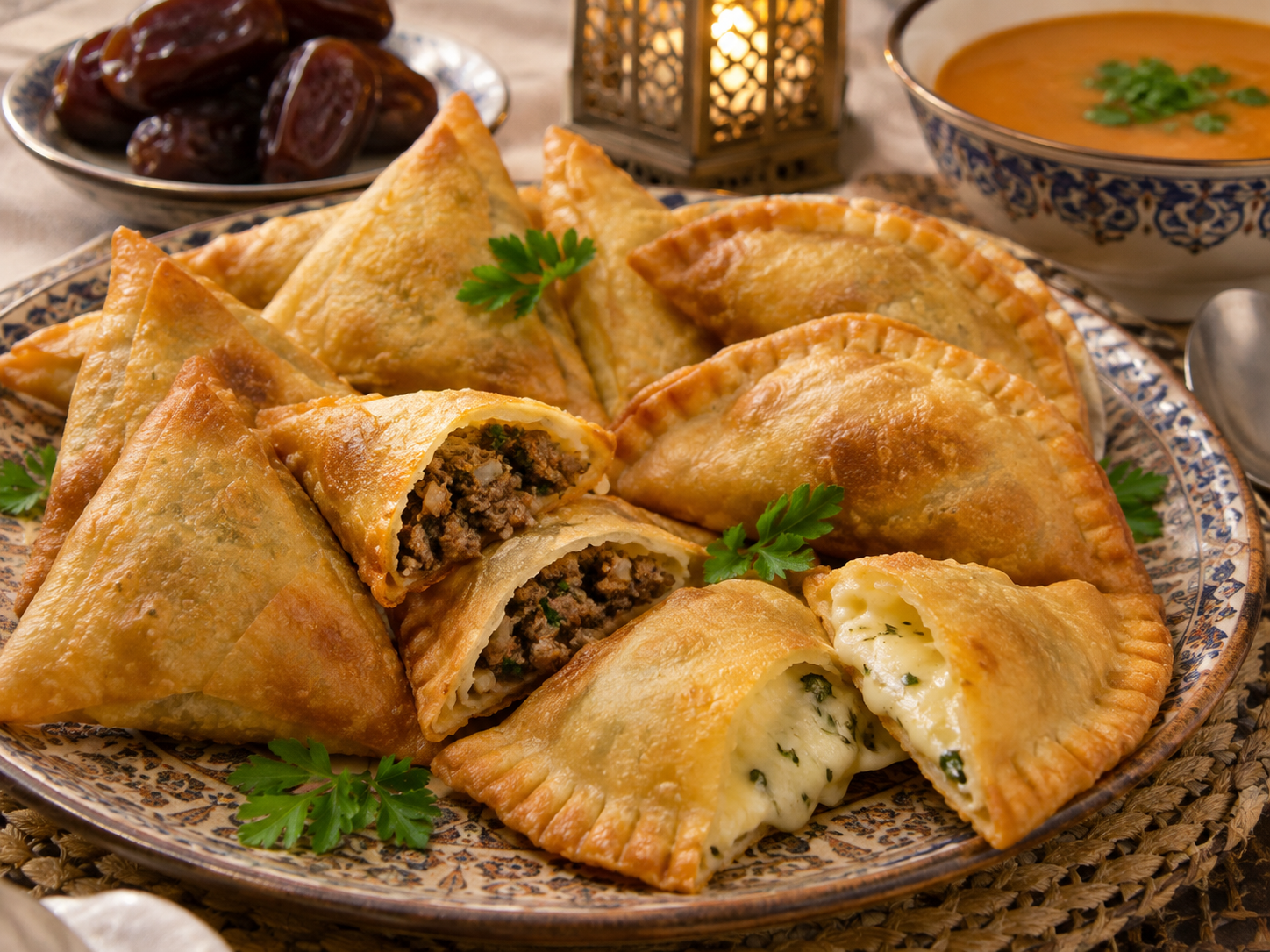
In parts of the Arabian Gulf, sambusa is often made with thin pastry sheets, folded into triangles and fried until light and crisp — almost like a delicate spring roll.
In Lebanon and neighboring Levantine countries, sambousek is also commonly shaped into a small half-moon.
The fillings can include minced lamb, beef, or chicken, as well as cheeses such as feta or other regional varieties.
Black pepper, cumin, onions, parsley, and pine nuts may add fragrance and depth, depending on the recipe.
Some Arab-style sambusa I have tasted seemed gentler in their seasoning than the Indian samosas I knew. I particularly enjoyed versions where the filling itself provided most of the flavor, sometimes complemented by a little lemon juice.
Of course, there is no single universal Arab sambusa recipe. Each region — and often each family — has its own preferences.
That variety is precisely what makes food exploration so fascinating.
Three Pastries, a Shared Persian Connection
Now comes the most intriguing question.
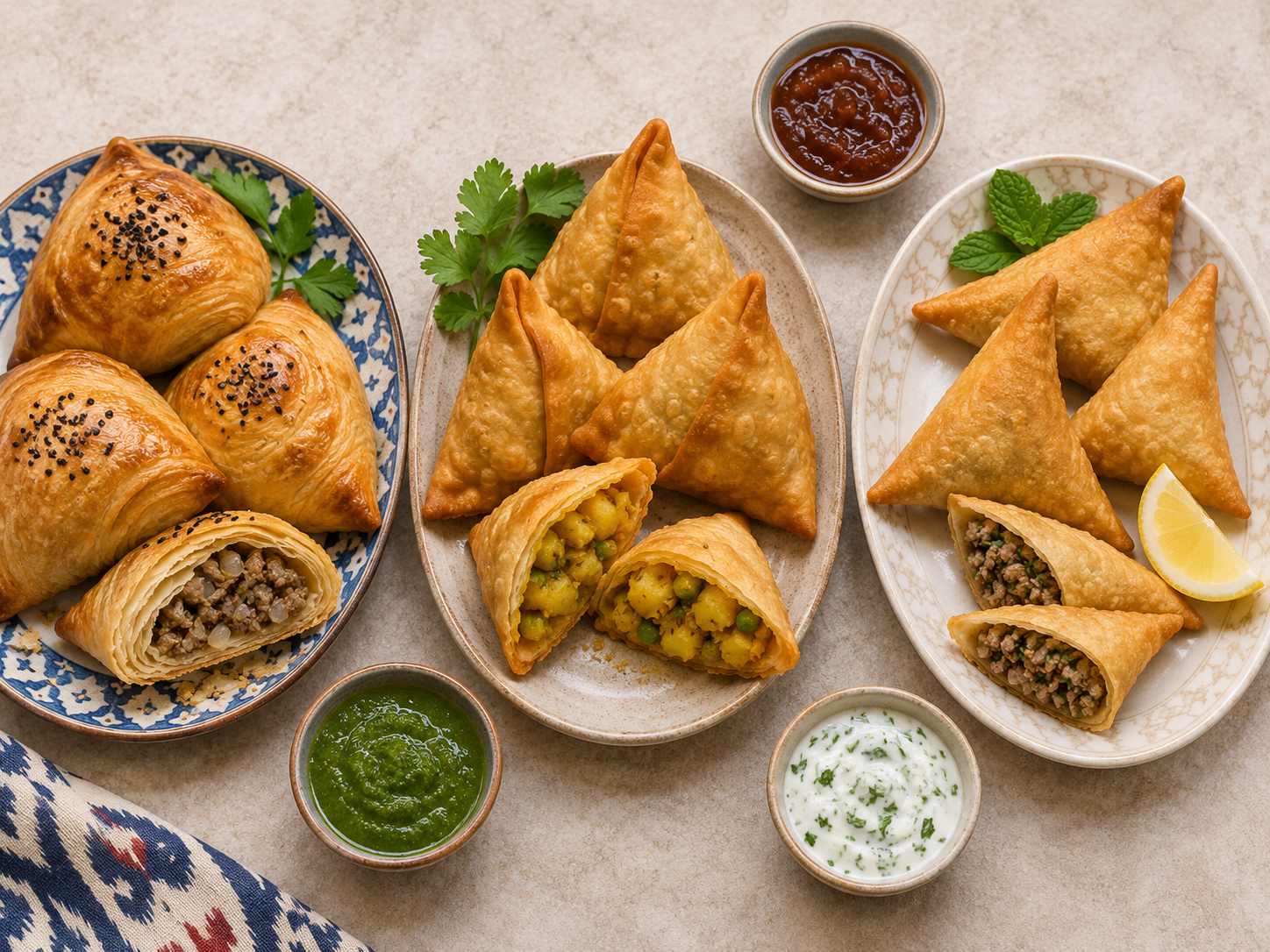
Uzbek samsa. Indian and Pakistani samosa. Arab sambusa.
Why do their names sound so similar?
Is it merely a coincidence?
Not quite.
These names belong to a much wider family of pastries whose terminology is connected to the old Persian word sanbosag.
Medieval Arabic culinary literature also mentions related names such as sanbusak and sanbusaq.
This suggests a long history of culinary exchange across Persia, Central Asia, South Asia, and the Middle East.
However, a shared linguistic history does not mean that every modern recipe developed directly from one identical original dish.
Food evolves as people migrate, trade, adapt recipes, and incorporate local ingredients.
In Uzbekistan, the pastry became a substantial, oven-baked favorite.
In India and Pakistan, it developed into a spiced snack deeply associated with everyday street food.
Across the Arab world, its relatives found their own place in family gatherings and Ramadan traditions.
Similar names, different flavors, and centuries of cultural adaptation.
Different Countries, Familiar Tables
This is one of the things I find most fascinating about exploring food cultures.
At first glance, dishes from distant countries may seem unrelated.
But when we look a little closer, unexpected connections begin to emerge.
Sometimes the ingredients are similar. Sometimes it is the cooking technique. And sometimes, the clues are hidden in the names themselves.
We often label foods according to the modern countries where they are most popular.
Yet food traditions have traveled across regions, languages, and communities for centuries — often long before today's national borders existed.
Perhaps our tables have been connected for far longer than we realize.
Uzbek samsa, Indian and Pakistani samosa, and Arab sambusa.
Different names, different traditions — but culinary cousins with a shared linguistic past.
Isn't that fascinating?