SALINK Founder · 2026-11-04
Distant Lands, Similar Tables II: Salmon Kibbeh Nayyeh and Korean Saengseonhoe
How two distant coastal cultures found different ways to celebrate fresh fish.
Distant Lands, Similar Tables II: Salmon Kibbeh Nayyeh and Korean Saengseonhoe
How two distant coastal cultures found different ways to celebrate fresh fish.
In the previous installment of Distant Lands, Similar Tables, we compared Lebanon’s kibbeh nayyeh with Korea’s yukhoe, exploring how two distant cultures developed their own ways of enjoying raw meat.
This time, we leave the land and turn toward the sea.
Lebanon sits on the eastern Mediterranean, while Korea is a peninsula surrounded by water on three sides. Despite the distance between them, seafood has played an important role in the food cultures of both places.
So how do Lebanon and Korea approach fish when freshness, texture, and minimal cooking are at the center of the dish?
When Kibbeh Meets the Sea
Lebanese cuisine is closely associated with ingredients such as olive oil, tomatoes, chickpeas, lentils, fresh vegetables, fragrant herbs, fruit, and citrus.
Its Mediterranean climate and long coastline have also made fish and seafood a natural part of the country’s culinary landscape.
Among Lebanon’s most recognizable foods is kibbeh.
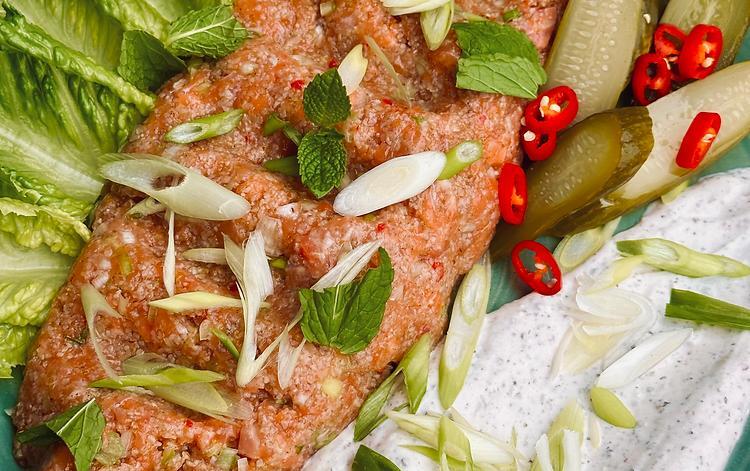
The best-known raw version, kibbeh nayyeh, is traditionally made by kneading very finely minced raw meat with fine bulgur, onion, and spices. The Arabic word nayyeh means “raw.”
But kibbeh is not limited to one form.
There is also kibbeh samak, or fish kibbeh, and modern cooks and restaurants have created seafood interpretations such as salmon kibbeh nayyeh and tuna kibbeh nayyeh.
In a salmon version, well-chilled fish is finely minced and blended with bulgur, onion or shallot, spices, and herbs until the mixture becomes smooth and delicate.
It can then be spread across a plate, patterned on the surface, and finished with olive oil. Mint, onion, Lebanese bread, or toum—the famous garlic sauce—may accompany it.
Compared with traditional meat-based kibbeh nayyeh, the seafood version feels lighter and more delicate.
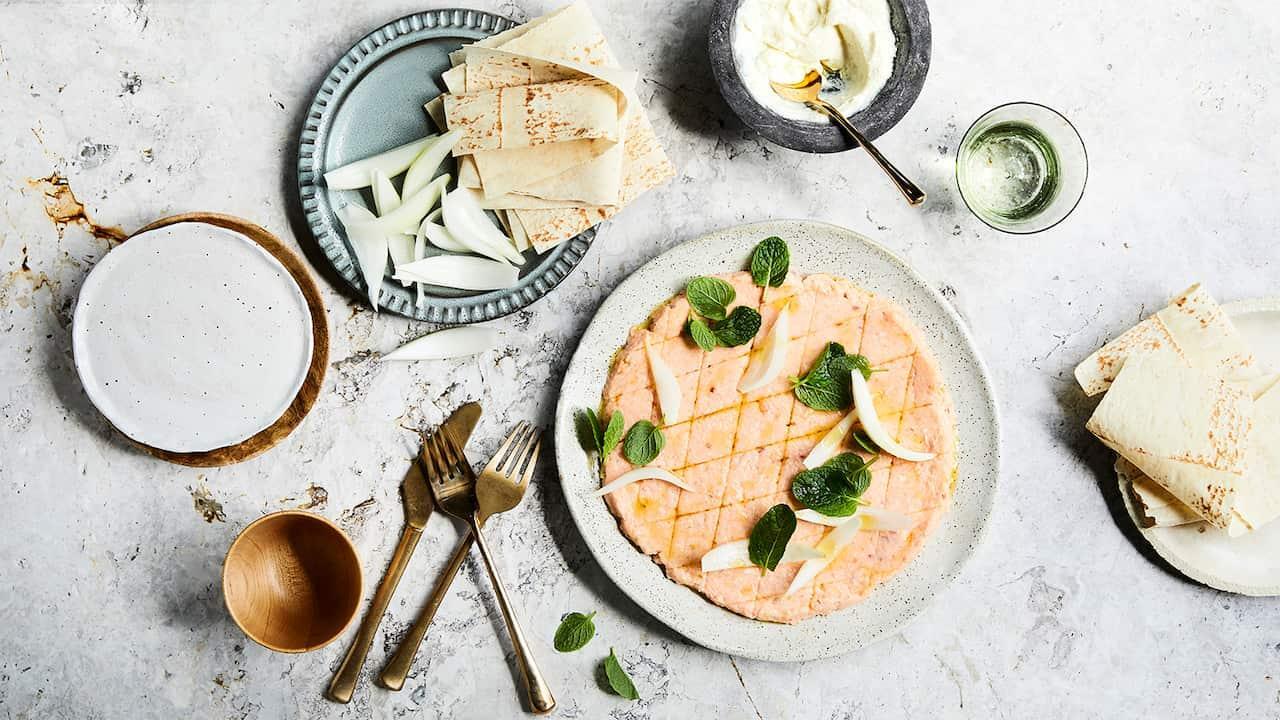
The soft texture of the fish meets the subtle chew of bulgur, while herbs, spices, and olive oil give the dish its distinctly Levantine character.
Rather than describing it as an ancient Lebanese raw-fish tradition, it is perhaps more accurate to see salmon kibbeh nayyeh as a modern seafood interpretation of Lebanon’s much older kibbeh culture.
Korean Saengseonhoe: Letting the Fish Speak for Itself
Korea also has a long history of eating fish in forms that preserve its freshness.
A 17th-century Joseon-era text describes raw fish being skinned, thinly sliced, wiped of excess moisture, and eaten with ginger, green onion, and mustard.
Today, saengseonhoe—Korean sliced raw fish—is a familiar part of Korean dining culture.
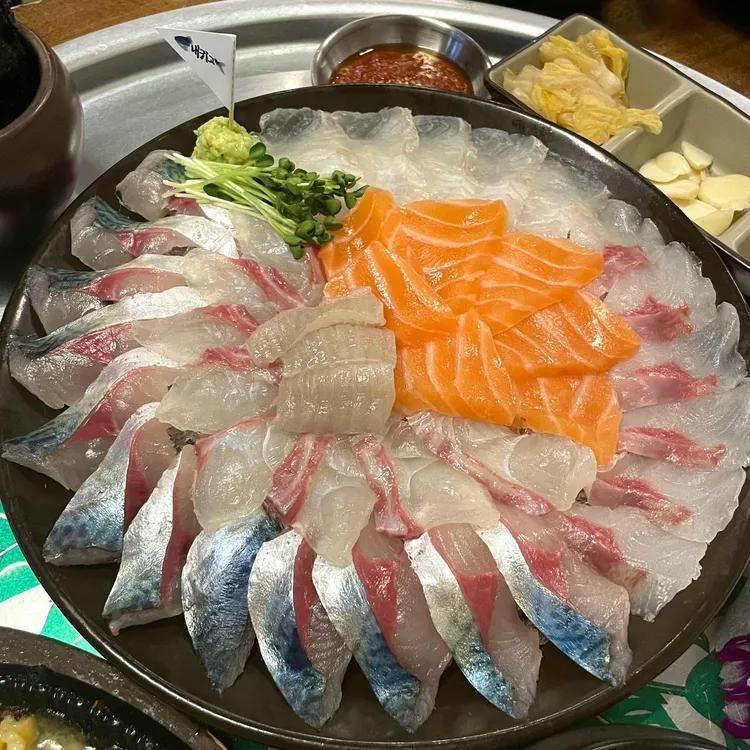
One of the most distinctive features of modern Korean sashimi culture has traditionally been its preference for live fish, or hwareohoe.
Fish is often kept alive in restaurant tanks and prepared shortly before it is served.
While Japanese sashimi culture often places greater emphasis on controlled handling and, in many cases, aging fish to develop umami, Korean live-fish culture has traditionally placed particular value on firmness, freshness, and the springy texture of the flesh.
And in Korea, the fish itself is only part of the experience.
One of the most familiar sauces is cho-gochujang, a sweet, sour, and spicy mixture based on gochujang and vinegar.
Another popular accompaniment is ssamjang, often combined with garlic, green chilli, and sesame oil.
For diners who want to focus more closely on the natural flavor of the fish, soy sauce with wasabi is another common choice.
A slice of raw fish may also be placed on lettuce or a perilla leaf, topped with raw garlic, chilli, and sauce, then wrapped into a single bite.
A Korean hoe restaurant meal is also rarely limited to one platter of fish.
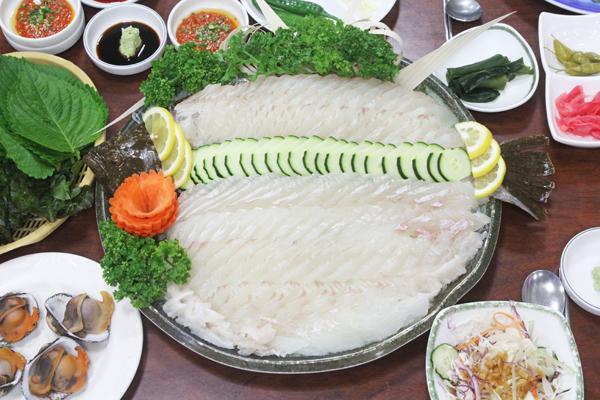
Depending on the restaurant, the table may include dishes such as corn cheese, pancakes, grilled fish, fried foods, sea squirt, abalone, shrimp, and other seafood before or alongside the main sashimi.
The result is not simply a plate of raw fish, but a shared table built around it.
The Same Ingredient, Two Very Different Ideas
Placed side by side, salmon kibbeh nayyeh and Korean saengseonhoe reveal an interesting contrast.
In the Lebanese-inspired preparation, the fish is finely minced and combined with bulgur, herbs, and spices to create one unified dish.
In Korean saengseonhoe, the fish is sliced in a way that preserves its original texture, while sauces, vegetables, garlic, and chilli remain separate so that each diner can build a different bite.
One approach combines the flavors before the food reaches the table.
The other allows the final combination to happen at the table itself.
In one, olive oil, herbs, spices, and bulgur surround the fish.
In the other, perilla leaves, garlic, fermented sauces, chilli, and soy sauce surround it.
The techniques are very different.
Yet both cuisines developed ways of enjoying fish that focus not on heavily cooking it, but on preserving and highlighting its freshness, texture, and natural character.
Similar Tables Between Two Seas
Korea is a peninsula surrounded by the sea, while Lebanon stretches along the Mediterranean coast.
Their languages, histories, religions, and social traditions are very different.
At first glance, there seems to be little reason for their food cultures to resemble one another.
But once we look more closely at the table, unexpected parallels begin to appear.
Both cultures value fresh seafood.
Both surround it with herbs, vegetables, and assertive condiments.
And both have strong traditions of placing food in the middle of the table and sharing it with others.
Faced with the same basic ingredient, Lebanon reached for bulgur, olive oil, herbs, and spices.
Korea reached for perilla leaves, garlic, fermented pastes, chilli, and sesame.
The answers are different.
But the question is remarkably similar:
How can we make the freshest fish taste most like itself—and most like us?
Perhaps that is what makes cultural comparison so interesting.
It is not about finding two cultures that are exactly the same.
It is about discovering how people in completely different places sometimes developed different answers to surprisingly similar questions.
Between a Mediterranean plate and a Korean table, the distance may be smaller than it first appears.