SALINK Founder · 2026-11-03 · Updated 2026-11-04
Distant Lands, Similar Tables: Lebanon's Kibbeh Nayyeh and Korea's Yukhoe
When two distant cultures meet through the language of food.
Across the globe, there are regions that—despite being geographically far apart and differing in history, language, and religion—share surprisingly similar cultural traits.
Lebanon in the Middle East and Korea in East Asia might just be two such places.
Today, we explore an intriguing commonality between these two distinct cultures by looking at Kibbeh Nayyeh, a traditional dish from Lebanon and the broader Levant region, and Korea’s Yukhoe (raw beef tartare).
The "Yukhoe" of the Levant: Kibbeh Nayyeh
In Lebanon and the Levant, there exists a dish that bears a striking resemblance to the Korean delicacy known as Yukhoe.
That dish is Kibbeh Nayyeh (كبة نيّة).
Kibbeh Nayyeh is a traditional preparation made by finely mincing fresh lamb or beef and mixing it with bulgur (cracked wheat), onions, mint, various herbs, and a blend of spices characteristic of the Middle East.
A defining feature of the dish is the process of finely mincing the meat and kneading it together with the other ingredients until it reaches a smooth, paste-like consistency.
Once prepared, Kibbeh Nayyeh is typically drizzled generously with olive oil and served alongside pita bread or an assortment of fresh vegetables.
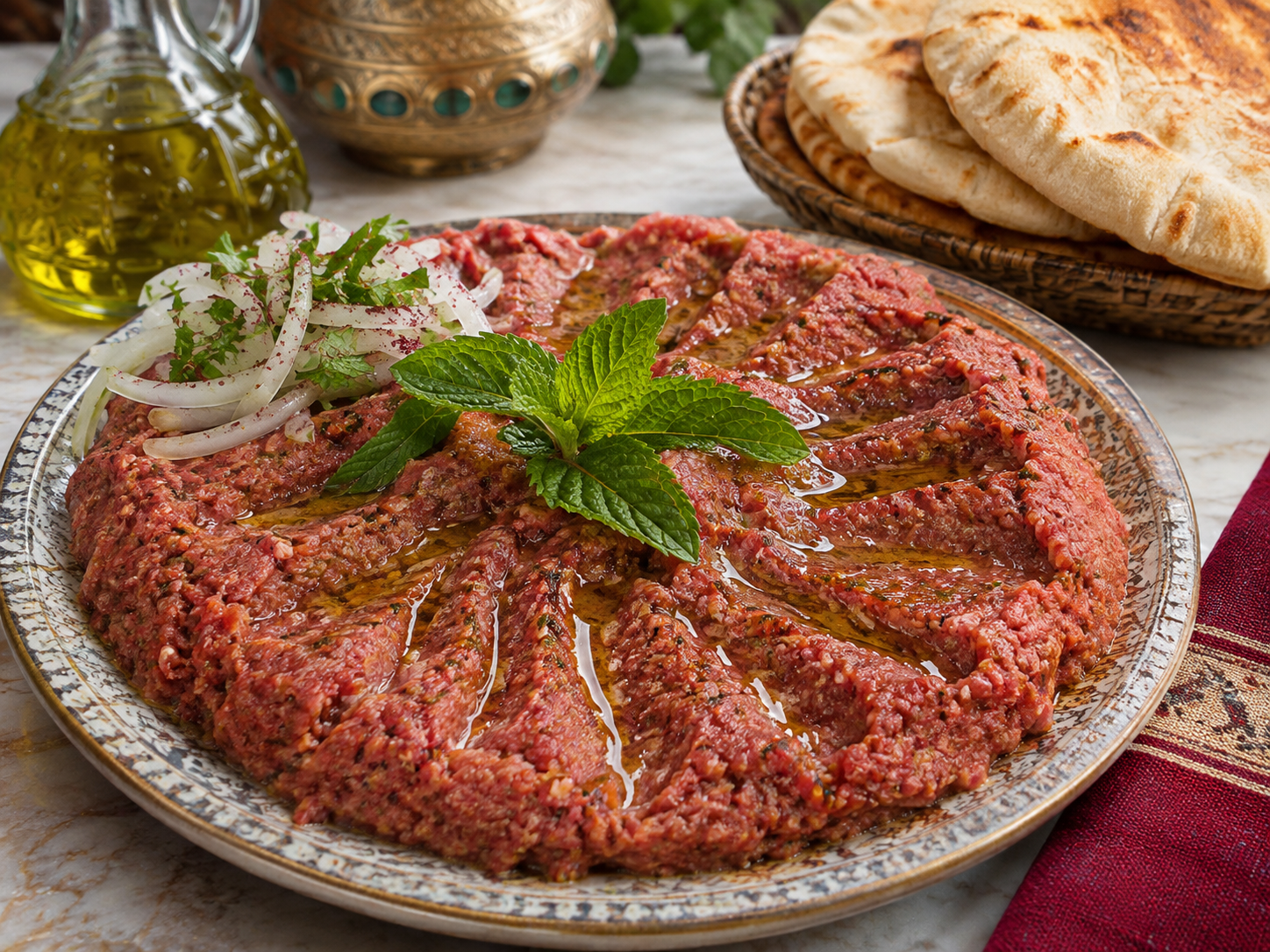
The harmonious blend of olive oil, aromatic spices, and fresh herbs perfectly captures the unique culinary culture of the Levant.
Interestingly, however, Korea has a dish that is quite similar.
Korean Yukhoe: A Different Way to Enjoy the Same Ingredient
In Korea, it is customary to visit restaurants specializing in hanwoo (Korean beef) for family gatherings, company dinners, or other special occasions.
One dish frequently encountered at such places is yukhoe—Korean-style beef tartare.
Like other forms of beef tartare, yukhoe uses raw beef.
However, the preparation method differs significantly from that of kibbeh nayyeh.
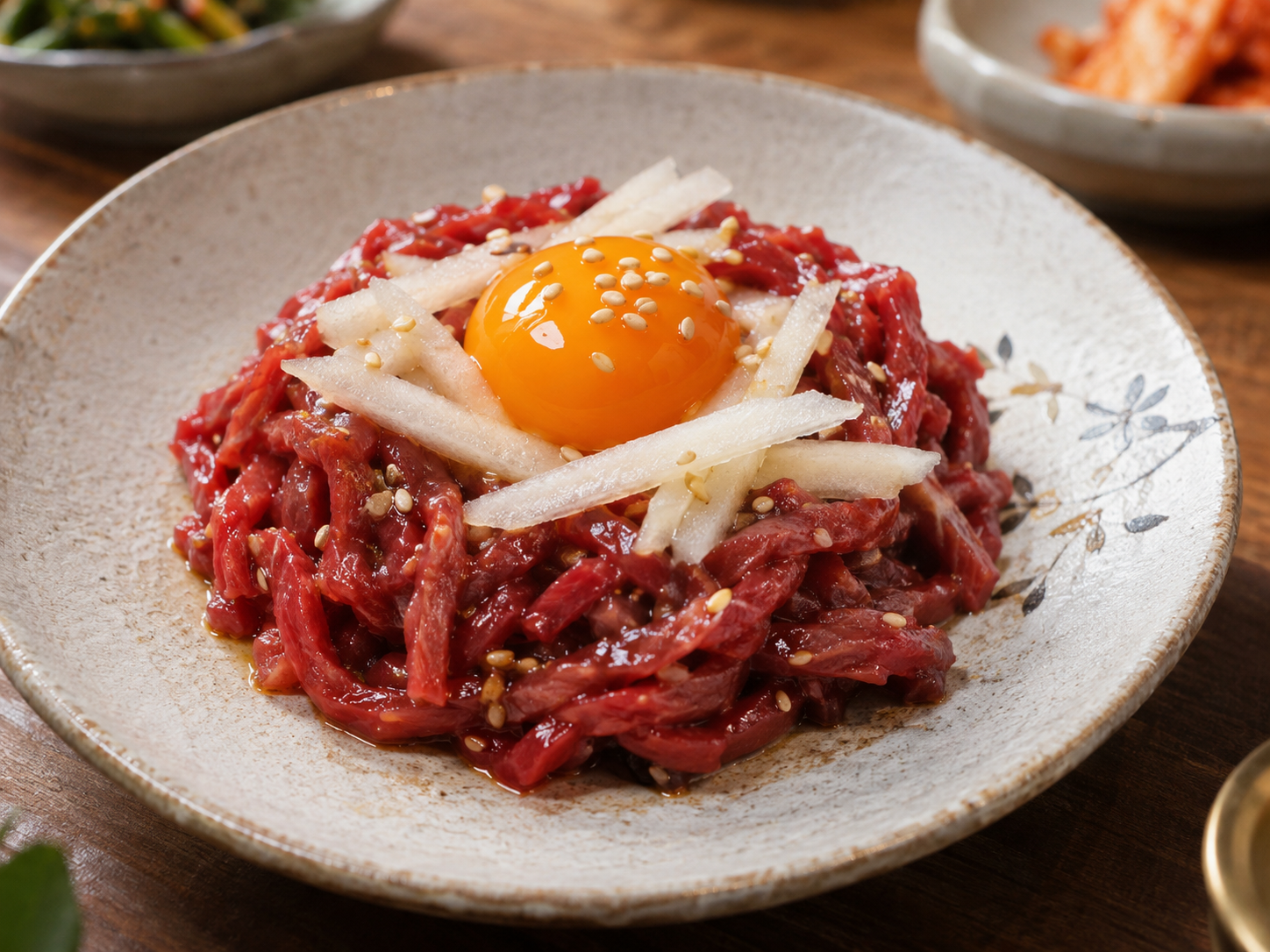
While kibbeh nayyeh involves finely mincing the meat and blending it with bulgur and spices into a paste-like consistency, yukhoe is typically prepared by slicing the beef into thin, long strips, which preserves the meat’s natural texture.
The dish is seasoned with a combination of ingredients such as sesame oil, soy sauce, sugar, salt, minced garlic, and black pepper. Depending on the restaurant or the region, it may also be served with accompaniments like sliced Korean pear or a raw egg yolk.
Whereas the Levantine kibbeh nayyeh emphasizes a harmony of olive oil, herbs, and spices, Korean yukhoe relies on sesame oil, soy sauce, and garlic to create a savory, umami-rich flavor profile.
Although both dishes utilize raw meat, they have developed distinct characters shaped by their respective natural environments and culinary traditions.
Naturally, because both dishes involve consuming raw meat, the hygienic handling and safe management of the ingredients are of the utmost importance.
Another Common Thread: Garlic
A look at the culinary cultures of both regions reveals another commonality: the use of garlic.
In Korean cuisine, garlic is an indispensable ingredient. It is used extensively—not only in yukhoe but also in a wide variety of meat dishes, soups, and banchan (side dishes).
Lebanese cuisine, too, features a culinary tradition that makes active use of garlic. A prime example of this is Toum (ثوم).
Toum is a sauce made primarily from garlic, blended with oil, lemon juice, and other ingredients; it is commonly served alongside dishes like Lebanese shawarma or roasted chicken.
While Korea and Lebanon differ in how they utilize garlic, both cultures have elevated this pungent ingredient into a key element of their respective culinary traditions.
Cultural Parallels Beyond Food
In fact, when exploring the cultural commonalities between Korea and the Levant, one can find intriguing parallels that extend well beyond the realm of food.
Historically in Korea—particularly during the Joseon Dynasty—women would wear a garment called a jang-ot (long cloak) to cover their faces and bodies whenever they ventured outside.
This is reminiscent of the hijab worn by some Muslim women today.
Admittedly, the jang-ot and the hijab emerged from distinct historical contexts, and they differ in both their religious significance and the specific purposes for which they are worn.
Nevertheless, the fact that both societies employed clothing to conceal the body—thereby reflecting the etiquette and social norms of their respective eras—serves as a fascinating starting point for cultural comparison.
I do not necessarily believe that these similarities imply a history of direct influence between the two cultures.
Rather, it is striking that human beings, living in entirely different environments, have at times arrived at similar solutions to life’s challenges and developed their own unique cultural practices.
Different, Yet Alike
Consider Lebanon’s kibbeh nayyeh and Korea’s yukhoe (beef tartare).
The former incorporates olive oil, bulgur, and herbs, while the latter uses sesame oil, soy sauce, and garlic.
In the Lebanese dish, the meat is finely minced into a paste-like consistency, whereas in the Korean version, the meat is sliced into thin strips to preserve its natural texture. Although they emerged from different histories and environments, both dishes share a common trait: a unique, culturally specific way of enjoying raw meat.
I believe that such small discoveries can serve as a starting point for broadening our interest in—and understanding of—different cultures.
We often perceive one another as strangers, simply because we speak different languages, hold different nationalities, or follow different religions and ways of life.
Yet, if we look a little closer, we may find that we have far more in common than we initially thought.
Perhaps the true beauty of culture lies not in total uniformity, but in the fact that while we are distinct, we also bear a certain resemblance to one another.
And sometimes, a single plate of food can help us realize this.